By Lucas Gray | Professional Gaffer & Cinematographer
If you’ve read my columns before, you know I’m a bit of a snob when it comes to lighting gear. On a Union set in Vancouver, equipment failure isn’t just annoying; it costs thousands of dollars a minute. Historically, when I heard “GVM,” I thought of YouTubers in their bedrooms, not 5-ton grip trucks.
But recently, GVM has been making some noise. They slapped the word “PRO” on their new lineup, and I decided it was time to stop ignoring them.
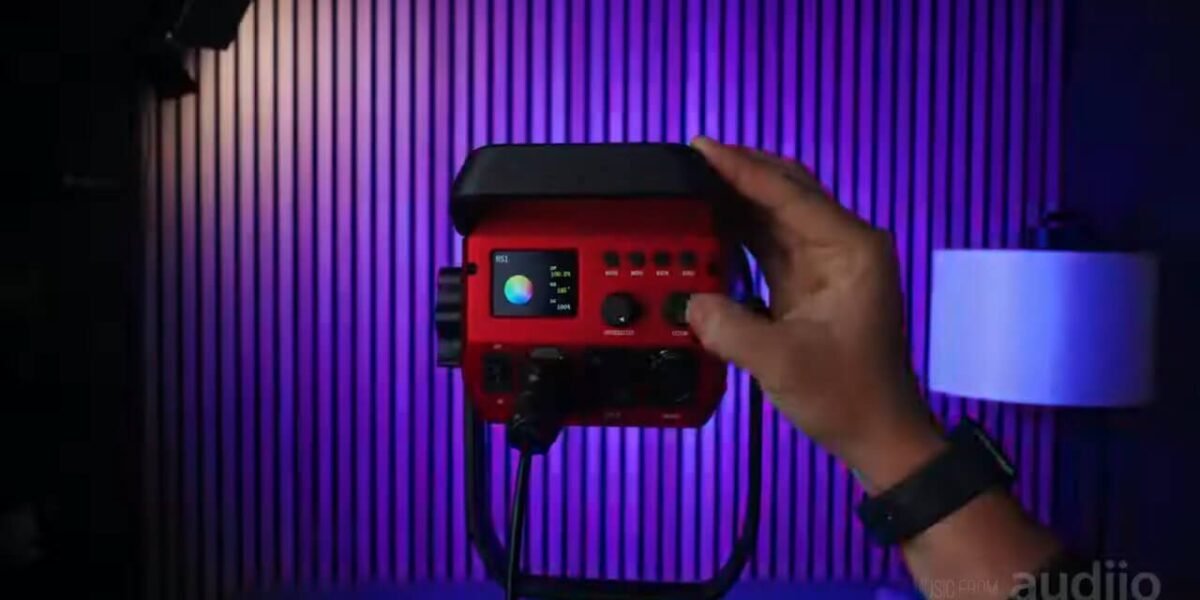
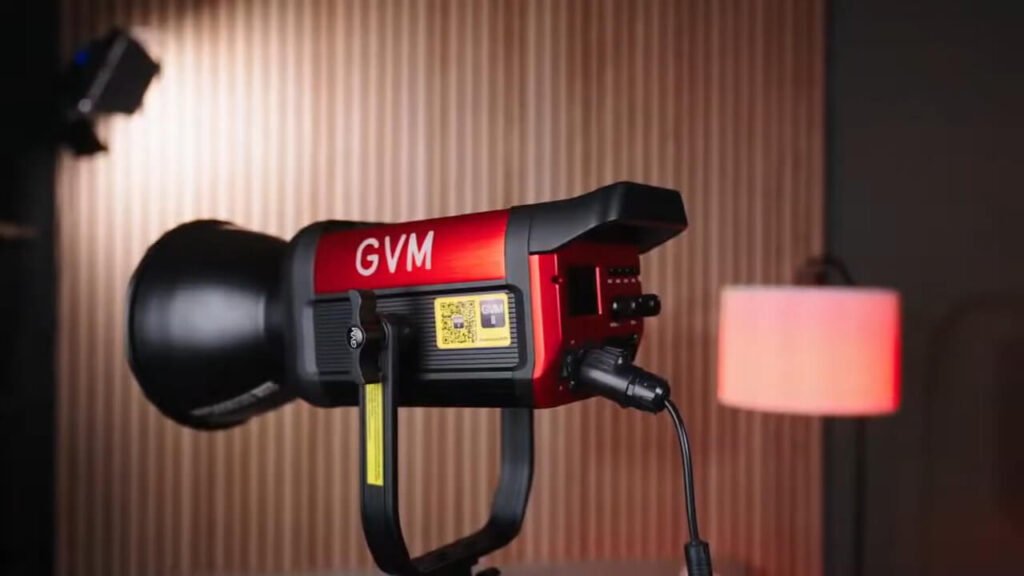
Today, I’m putting the GVM PRO SD300C (often searched as the GVM 300c) through its paces. Is it just a toy with a “Pro” sticker, or is it a legitimate tool that I can use on a commercial shoot?
Spoiler alert: The spec sheet on this thing is actually terrifyingly good for the price. Let’s break it down.
1. The Output: 48,200 Lux is No Joke
The first thing any gaffer asks is, “Does it have punch?”
GVM claims the PRO SD300C outputs 48,200 lux at 1 meter with the standard reflector. I’ve metered a lot of lights, and for a 300-watt RGB fixture, that is some serious horsepower.
Usually, when you go Full RGB, you lose a ton of output compared to daylight-only fixtures. But the SD300C manages to hold its own. In a practical sense, this means I can punch this light through a 4×4 diffusion frame (like a 216 or 250) and still have enough stop to light a subject for an interview. It’s not going to replace an M18 HMI fighting the sun, but for interiors? It’s a beast.
2. CCT Range: Going Beyond Daylight
Most lights I rent give me 2700K to 6500K. That covers tungsten and daylight. Fine.
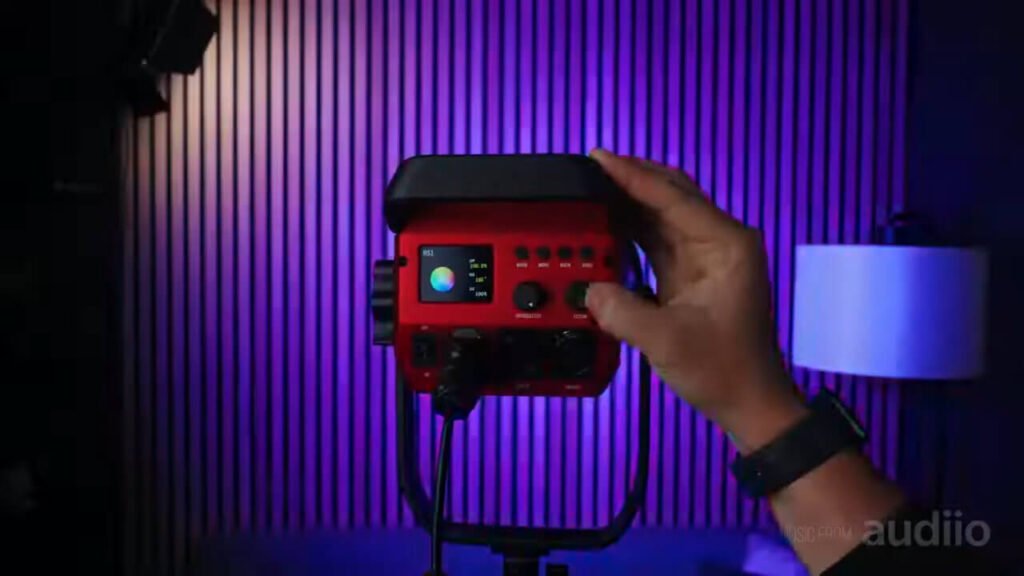
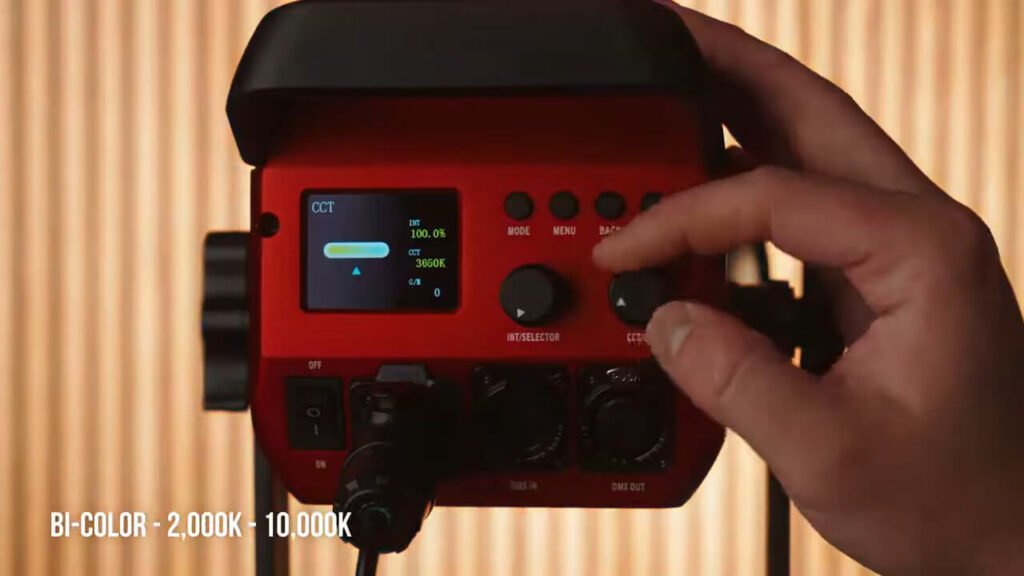
But the GVM PRO SD300C boasts a massive range of 2000K to 10,000K.
Why does a gaffer need 10,000K?
Imagine we are shooting a scene that needs to look like “blue hour” (just before sunrise) or deep, overcast shade. 6500K isn’t blue enough. I usually have to clip on CTB (Color Temperature Blue) gels, which cuts my light output.
With the SD300C, I can just dial it to 10,000K instantly. No gels, no output loss.
On the flip side, 2000K is basically candlelight warmth. Having that flexibility built-in without reaching for my gel pouch is a massive workflow speed boost.
3. Color and Creative Control (RGB)
As a “C” model (SD300C), this is a full-spectrum RGB light.
GVM rates the light engine at CRI and TLCI of 97+. In my tests, skin tones looked creamy and natural. There wasn’t that weird green tint you sometimes get with budget LEDs.
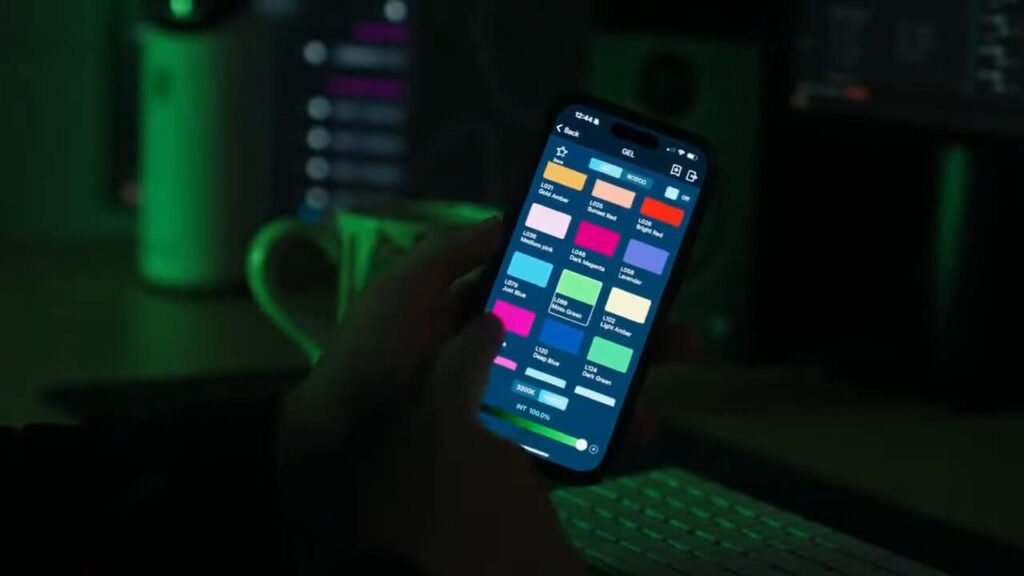
But the fun part is the Full RGB Output. We have precise control over Hue, Saturation, and Intensity (HSI).
- Need a deep red for a horror scene? Done.
- Need a subtle teal to backlight a subject for that “cyberpunk” look? Done.
It also comes with 12 Professional Light Source Presets, which is a feature I use more than I admit. It has presets for Tungsten, Halogen, HMI, etc. When the DP shouts, “Make it look like a streetlamp,” I don’t have to guess the Kelvin; I just hit the preset.
4. The “Pro” Features: DMX and Dimming
This is the section that determines if a light gets on my truck.
1/1000 Step Dimming:
Consumer lights dim in 1% increments. That sounds fine, until you need to do a subtle fade-out during a shot, and the light looks like it’s “stepping” down (10%… 9%… 8%). It looks cheap.
The GVM PRO SD300C features 1/1000 step dimming. This means the dimming curve is buttery smooth. You can fade from 100% to 0% without a single flicker or jump. This is a high-end feature I expect from Arri, so seeing it here is impressive.
Connectivity:
It supports Wired DMX control. This is non-negotiable for studio work. We can patch this light into our board and control it alongside $5,000 fixtures.
It also supports Bluetooth Mesh Networking and the GVM App. While I prefer DMX, having the App control for a small 2-light setup on a corporate gig is super handy. You can control multiple lights from your iPad without running DMX cables everywhere.
5. Effects: More Than Just Gimmicks
The unit comes with 16 built-in lighting effects (Lightning, Explosion, TV, Party, Cop Car, etc.).
I used the “TV” effect recently to simulate a character watching a movie in a dark room. It creates that random, flickering blue/white glow on the actor’s face. Being able to customize the speed and intensity of these effects saves me from having to manually wave a flag in front of the light like we did in the 90s.
6. Build and Portability
The GVM 300c comes with a durable carrying case. This matters. Gear gets thrown around. If a light doesn’t have a good case, it’s dead to me.
The “Outdoor-Ready Design” (as GVM calls it) implies it’s built for mobility. It’s compact and lightweight enough that I can rig it on a boom arm (menace arm) without needing massive counterweights.
Note: While it says “outdoor-ready,” always check the IP rating. I’d still bag it if it starts raining heavily in Vancouver, just to be safe.
Technical Specifications Breakdown
Here is the data sheet for the geeks (like me):
| Feature | Specification | Notes |
| Model | GVM PRO SD300C | |
| Output | 48,200 Lux @ 1m | w/ Standard Reflector |
| Power | 300W | |
| CCT Range | 2000K – 10,000K | Ultra-wide range |
| Color Quality | CRI ≥ 97, TLCI ≥ 97 | High Fidelity |
| Dimming | 0-100% (1/1000 steps) | Flicker-free |
| Control | DMX, App, Bluetooth Mesh | Professional integration |
| Effects | 16 Built-in FX | Lightning, TV, etc. |
| Presets | 12 Source Presets | Tungsten, HMI, etc. |
Final Verdict: Is it “Lucas Approved”?
I am genuinely surprised by the GVM PRO SD300C.
GVM has clearly listened to the market. They moved past the “entry-level” mindset and added features that working professionals actually need: DMX, high-resolution dimming, and massive CCT flexibility.
Who is this for?
- The Independent Owner-Operator: If you need a light that can do everything (Key light, RGB background light, Effects light) but you can’t justify spending $2,000 on a single head, this is your winner.
- Small Production Companies: You can buy three of these for the price of one high-end brand competitor. That means more lights on set, and more creative options.
For the price, the GVM 300c is punching way above its weight class. It has earned a spot in my kit as the ultimate “utility player”—ready for anything I throw at it.
Lucas Gray is the lead writer for StudioLights.org and a working gaffer based in Vancouver. He drinks his coffee black and hates tangled cables.