By Lucas Gray | DP & Professional Gaffer
In the golden age of 4K sensors and high-dynamic-range (HDR) storytelling, one truth remains: your camera is only as good as the photons hitting its sensor. Whether you are a solo YouTuber or a commercial DP, choosing the right video light is the single most important decision you will make for your production.
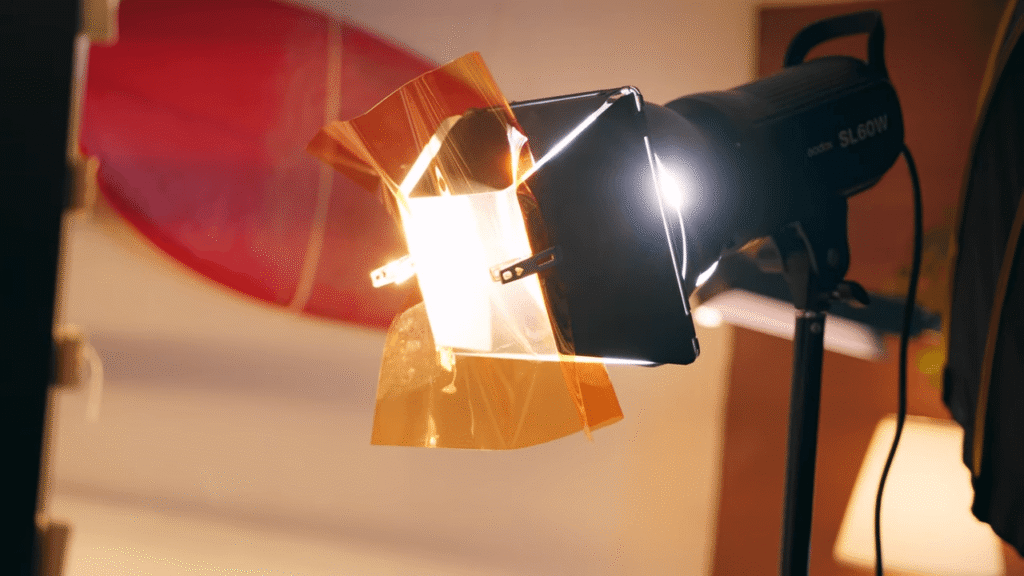
But what defines a “pro-grade” video light in 2026? It’s no longer just about brightness. It’s about color science, silent operation, and smart integration.
1. Why You Can’t Use “Just Any Light” for Video
Still photographers have the luxury of strobes (flashes) that can overpower the sun for a fraction of a second. As videographers, we need constant light. But constant light brings constant challenges.
- The Shutter Speed Trap: Since video often follows the “180-degree shutter rule,” you are locked into specific exposures. You can’t just leave the shutter open longer to compensate for a weak video light.
- The Frame Rate Issue: Cheap LEDs flicker. While invisible to the eye, at $60\text{fps}$ or $120\text{fps}$ (slow motion), low-quality lights create distracting horizontal bands across your footage.
- The Heat/Noise Balance: A powerful video light generates heat. If the cooling fan sounds like a jet engine, it will ruin your audio.

2. Technical Specs: The “Gaffer’s Checklist”
When browsing for a video light, don’t just look at the wattage. Look at the quality of the light.
I. Color Accuracy (CRI & TLCI)
In 2026, anything below a CRI of $95$ is unacceptable for skin tones. However, pros look at the TLCI (Television Lighting Consistency Index).
- CRI $96+$: Excellent for social media and vlogs.
- TLCI $97+$: Required for broadcast and cinematic skin tones to avoid “magenta” or “green” color shifts in post-production.
II. COB vs. LED Panels
- COB (Chip on Board): Think of these as a single, powerful “point source.” They are the workhorses of the industry because you can attach modifiers like softboxes, snoots, or Fresnel lenses to shape the beam.
- LED Panels: Best for soft, diffused fill light in tight spaces. They are portable but offer less control over where the light “spills.”
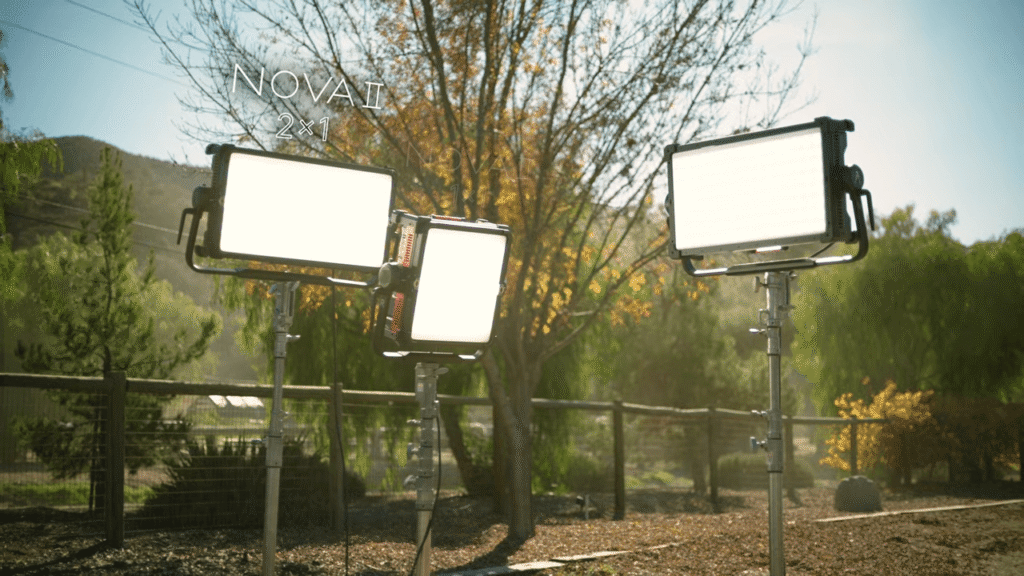
3. The Versatility of Bi-Color and RGBWW
Gone are the days of carrying crates of blue and orange plastic gels. A modern video light should be as flexible as your creative vision.
- Bi-Color ($2700K – 6500K$): Essential for matching the “warmth” of indoor lamps or the “coolness” of a window’s daylight.
- RGBWW: These lights allow you to dial in any hue in the visible spectrum. For music videos or high-energy tech reviews, using an RGB video light to add a “cyberpunk” blue or a “dramatic” red to the background adds instant production value.
4. Applying the 3-Point Setup with Your Video Light
You don’t need ten lights to make a professional image. You need three, used correctly.
5. The “Silent” Revolution in Video Lighting
As someone who has spent decades on sets, I can tell you that the biggest innovation in a modern video light isn’t the brightness—it’s the silence.
Modern professional lights, like the GVM Pro Series, utilize advanced passive cooling or ultra-quiet hydraulic fans. When you are recording a high-stakes interview, the last thing you want is your video light introducing a hum that competes with the vocals.
Conclusion: Lighting is the New Lens
In the past, filmmakers obsessed over lenses. Today, we know that a $\$200$ video light used with skill will yield better results than a $\$2,000$ lens used in bad light.
Invest in a video light that grows with you. Look for app control (like the GVM or Sidus Link ecosystems), high color accuracy, and silent operation. Your viewers might not consciously notice the lighting, but they will certainly feel the professional quality.