Shooting outdoor portraits well comes down to one recurring problem: how do you shape light convincingly when the sun refuses to cooperate? A single, well-controlled flash solves that problem faster than an entire bag of modifiers, and the Godox AD300Pro II has become a go-to choice for photographers who need real power without the weight of a full studio kit.
Why a Single Flash Still Beats a Full Lighting Kit Outdoors
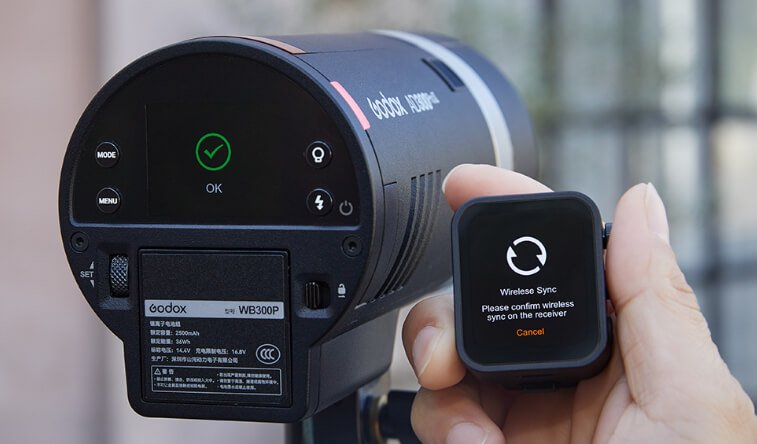
On location, every extra light stand, modifier, and battery pack is friction — more to carry, more to set up, and more that can go wrong between locations. A flash with enough output to overpower daylight removes most of that friction: one head, one modifier, and a fast recycle time can replace two or three continuous fixtures while delivering more usable power per shot. That’s especially true at midday, when ambient sun easily outguns anything short of a serious flash output, and recycle speed determines whether you catch a fleeting expression or miss it entirely.
Godox AD300Pro II Buying Guide: What Matters for Portrait Work
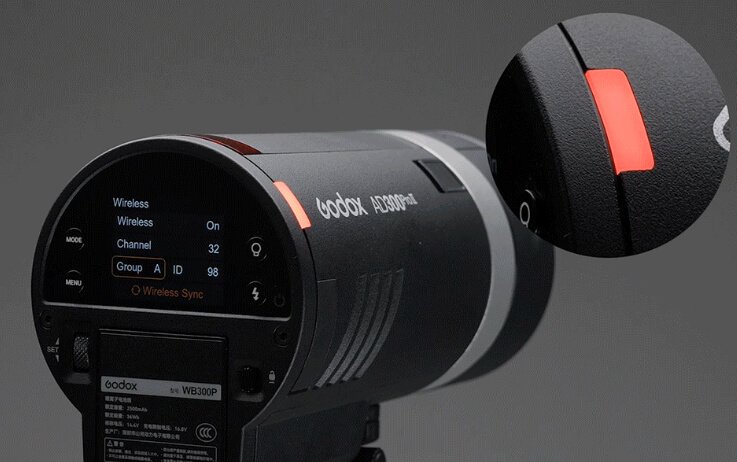
A location flash has to balance three things — output, recovery speed, and weight — without forcing a trade-off between any of them. The AD300Pro II is built around that balance: 300Ws of power with a 10-stop range (1/512 to 1/1) adjustable in ±0.1-stop increments, a 0.01–1.5s recycle time even at full power, and roughly 350 full-power flashes per charge, all in a 1.2kg body that fits inside a camera backpack. A 12W bi-color modeling lamp (2800K–6000K, CRI ≈97) lets you preview the look before committing to a flash, and the built-in Godox 2.4GHz X system pairs instantly with X3/X3Pro transmitters — no channel or group setup required — while still supporting XPro, X2T, and X1 transmitters, a 3.5mm sync port, and USB-C for the optional FR433 receiver.
| Spec | Detail |
|---|---|
| Power output | 300Ws, 10 steps (1/512–1/1, ±0.1) |
| Recycle time | 0.01s–1.5s |
| Flashes per charge | Approx. 350 |
| Weight | Approx. 1.2kg (with battery) |
| Modeling lamp | 12W bi-color, 2800K–6000K, CRI ≈97 |
| Sync | HSS to 1/8000s, 3.5mm sync, X3/X3Pro one-tap |
| Mount compatibility | Godox native; Bowens via S3; Profoto/Elinchrom/Broncolor via AD-AB adapter |
That last line matters as much as the power figures: the native Godox mount handles most modifiers out of the box, an S3 bracket opens up the entire Bowens-mount ecosystem, and the AD-AB adapter extends compatibility to Profoto, Elinchrom, and Broncolor gear — so an existing modifier collection rarely needs replacing.
10 Creative Lighting Techniques for Outdoor Portraits with One Flash
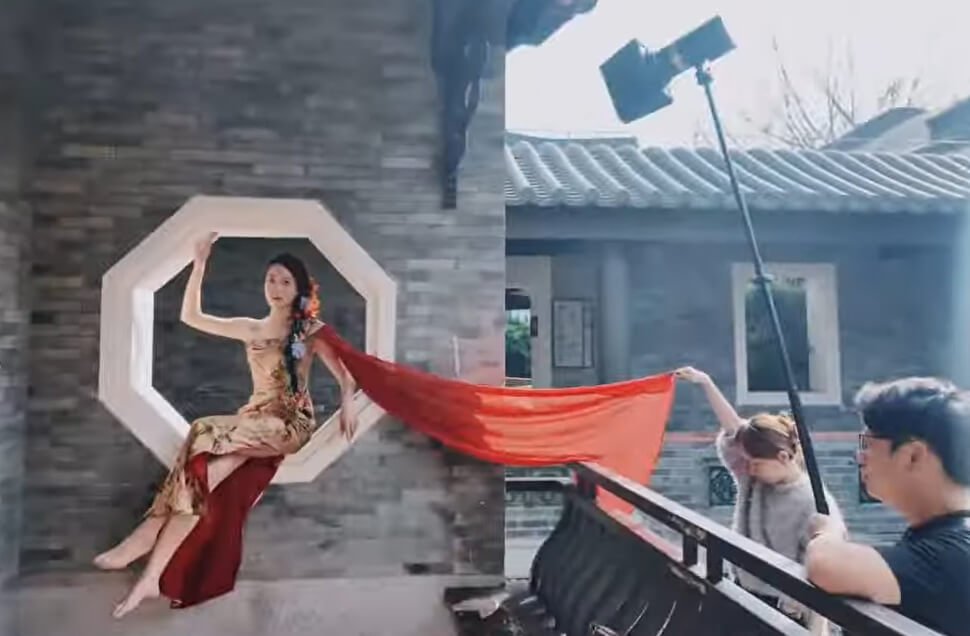
- Shape light with gobos, not just distance. A four-leaf barn door or flag lets you carve a narrow beam onto a subject in a shaded walkway at low power (around 1/32) without spilling light onto the background.
- Overpower the sun. Push toward full output to punch through harsh midday light, giving you clean, controllable shadows instead of fighting the sun for exposure.
- Feather for softer skin tones. Angle a deep softbox so only the edge of the light spreads across the face — it softens transitions between highlight and shadow far more naturally than direct output.
- Add a rim light behind the subject. A second head positioned behind the model at meaningful output separates hair and shoulders from a busy or similarly-toned background.
- Chase visible light beams. Full-power output shot through window slats, foliage, or lattice creates a dusty, atmospheric “god ray” look that reads as far more cinematic than ambient light alone.
- Combine HSS with a slow shutter. High-speed sync at something like 1/30s lets flowing fabric or hair blur naturally while the flash still freezes the subject’s expression.
- Use the modeling lamp to direct posing. Rather than guessing, dial the bi-color lamp to match the scene and have the subject find the angle where light falls most evenly across their face.
- Build a silhouette from behind. Fire the flash into the back of an umbrella or panel at full power to project a clean subject silhouette rather than lighting them directly.
- Color-code multi-light setups on set. With 16 available group-indicator colors, a crew can identify which light is which at a glance, cutting down on mis-triggers during fast-paced shoots.
- Trust the range for wide compositions. A reliable 2.4GHz trigger link means you can back far away for a deep environmental portrait without worrying about dropped signals.
Mini Case Study: A Garden Portrait Session
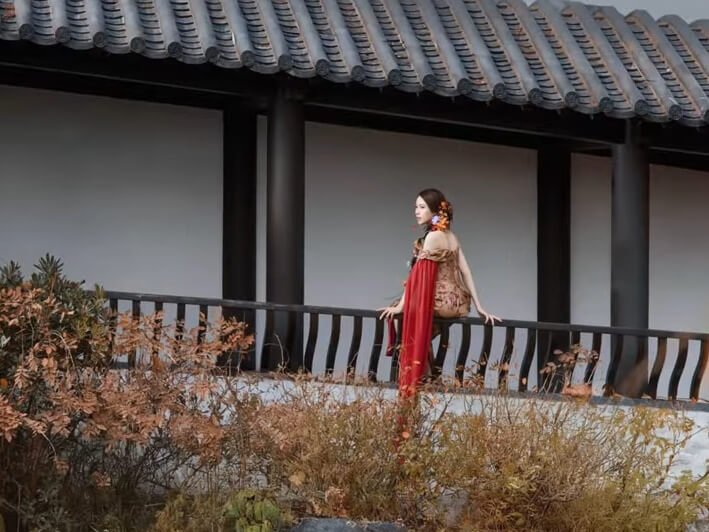
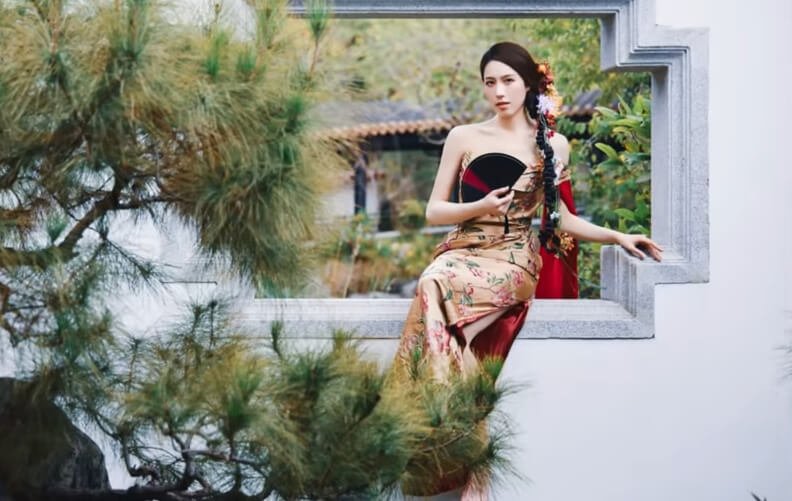
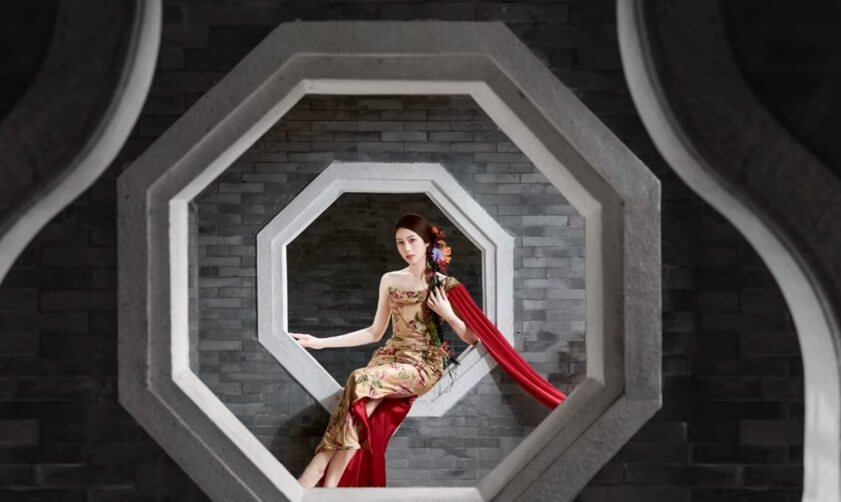
On an overcast afternoon shoot in a shaded courtyard, a single AD300Pro II head sat camera-left at 1/32 power through a four-leaf barn door, keeping light tight on the subject’s face while the stone walls behind stayed a stop underexposed. For a second look near a sunlit archway, output climbed to roughly 1/4 power to hold detail against direct sun, with the modeling lamp set to 4200K to preview how the warm stonework would read before a single frame was fired. A closing shot used HSS at 1/30s shutter with the flash near full power, freezing the subject mid-turn while a loose scarf blurred with the motion — three completely different looks from one flash head, achieved by adjusting power and modifier choice rather than swapping equipment.
Conclusion
Outdoor portrait work rewards photographers who can shape light quickly and adapt to changing conditions without hauling a full studio kit. The techniques above — from gobo shaping to HSS motion blur to full-power backlighting — all come down to having a flash with enough range, recycle speed, and modifier compatibility to keep pace with a moving shoot. Ready to simplify your outdoor portrait kit? Explore the Godox AD300Pro II to get studio-grade power and control in a bag light enough to run with.
FAQ
Can the AD300Pro II handle backlit sunset portraits at full power?
Yes — 300Ws at full output is generally enough to balance a subject against a setting sun, and the 10-stop range lets you dial back precisely once the ambient light drops.
How many looks can I get from one battery during a half-day shoot?
At roughly 350 full-power flashes per charge, most sessions only need partial power for a portion of shots, so a single battery typically covers a half-day shoot without a swap.
Will my existing softboxes and modifiers work with this flash?
Godox-mount modifiers attach directly; Bowens-mount gear works with the optional S3 bracket, and Profoto, Elinchrom, or Broncolor modifiers work through the AD-AB adapter.
Is HSS necessary for outdoor portraits, or only for freezing fast motion?
HSS is most useful when you want a wide aperture in bright daylight without exceeding your camera’s native sync speed, which is a common need for outdoor portraits, not just action shots.
How reliable is the wireless trigger in open outdoor spaces?
The built-in 2.4GHz system is rated for roughly 100m of range, and real-world use in open outdoor settings has shown consistent triggering well beyond typical portrait working distances.