I’ve hauled lighting gear onto sets ranging from cramped indie apartments to major studio backlots, and if there’s one lesson that never changes, it’s this: the best portable light for photography isn’t the one with the biggest number on the box.
It’s the one you can pull out of a bag, dial in fast, and trust to do exactly what you need before the moment passes. That’s a very different light in 2026 than it was even five years ago, mostly because of one category that’s quietly taken over my kit — focusing LED lights for photography.
Table of Contents
Continuous Lighting for Photography Has Changed
When I started in this industry, continuous lighting meant tungsten fixtures that ran hot enough to sear a hand and drew more power than most apartment circuits could handle. You lived with what you had — a fixed beam, a fixed color temperature, and a lot of gaffer’s tape and diffusion trying to make it behave.
That’s not the world we’re shooting in anymore. Today, a single compact COB fixture can zoom its beam from a tight spot to a wide flood, shift color temperature at the twist of a dial, and run cool enough to sit a foot from an actor’s face without anyone sweating through their wardrobe. I remember the first time I focused a beam down to a hard 15-degree spot on a night exterior and watched it carve a rim of light around my subject from twenty feet back — no flags, no extra grip gear, just the lens on the fixture doing the work. That moment is when I stopped thinking of continuous LEDs as a compromise and started building entire setups around them.
What Makes the Best Lights for Photography
Ask ten gaffers what makes a good light and you’ll get ten different answers, but a few things show up on every list that actually matters on set:
- True color accuracy. A CRI and TLCI rating in the high 90s isn’t a marketing number — it’s the difference between skin tones that look alive and skin tones you’re fighting to fix in post.
- A wide, usable color temperature range. You need a light that can match a warm practical lamp in one shot and cool daylight streaming through a window in the next, without swapping gel.
- Real dimming control. Stepless dimming with more than one curve option means you can shape a fade or a flicker effect the way it actually looks in the real world, not in flat steps.
- Portability that doesn’t sacrifice power. If a light needs a separate ballast, extra cabling, and a cart to move it, it’s not portable — it’s just smaller than a studio fixture.
- Quiet operation. Anyone who’s ruined a take because a fan kicked into high gear mid-dialogue knows why this matters more than most spec sheets admit.
That last one sounds minor until you’re on a quiet dialogue scene with the mic six inches from your key light. I’ve been there. It’s not minor.
Photography Light Box: The Old Way of Softening Light
For years, the answer to “how do I make this light usable” was to bolt something onto the front of it. A softbox, a diffusion dome, a bounce card, a lightbox — whatever you could rig to knock down the harshness of a raw LED panel or COB source. I still carry softboxes; they’re not going anywhere. But they were always a workaround for a light that only did one thing well.
The frustration was never the softbox itself — it was needing one for every single look. Want a hard key for a moody scene, then a soft fill five minutes later? That used to mean swapping modifiers, re-metering, and hoping you didn’t lose momentum with the talent. A photography light box solves softness. It doesn’t solve versatility.
Focus Lights for Photography: Where the Real Shift Happened
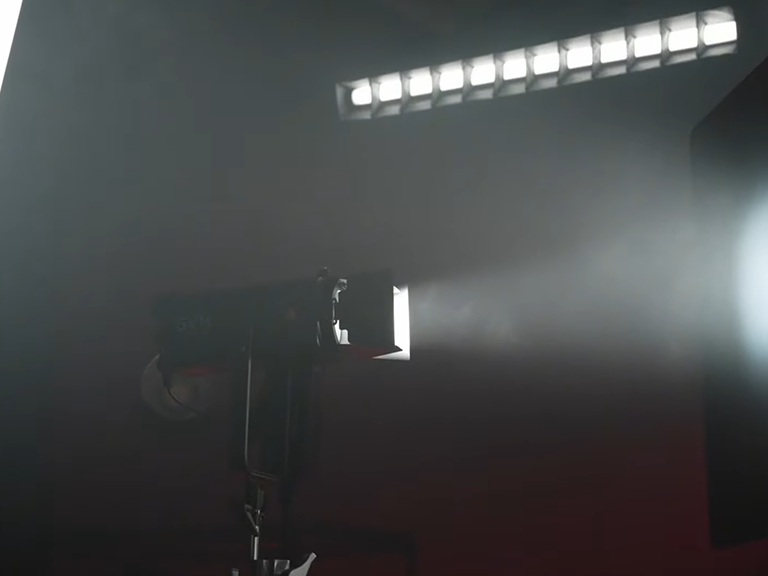
This is where focusing LED lights earned their spot in my kit permanently. A focus light does what a softbox and a spot reflector used to require two separate tools to accomplish — it lets you physically zoom the beam from a tight, punchy spot to a broad, even flood using nothing but a knob on the housing.
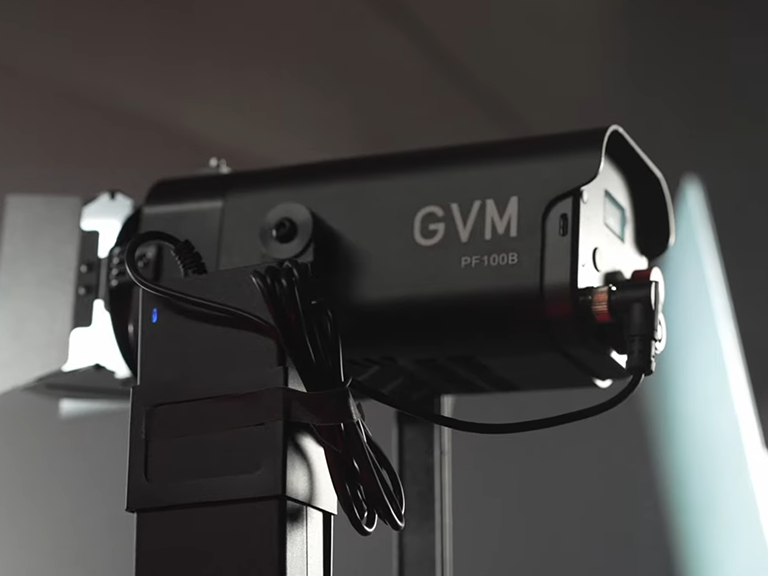
The fixture I’ve been running lately on smaller setups is the GVM PF100B, a 100W bi-color focusing COB light, and it’s become the light I reach for first when I know I’ll need to adapt on the fly. It zooms from a 15° spot up to a 45° flood using a TIR optical lens, pushing 30,200 lux at 1 meter in spot mode — plenty of punch for a key light at a real working distance, not just a desk-side accessory. The CCT range runs 2700K to 6800K with a CRI and TLCI both rated above 97, so I’m not second-guessing skin tones when I pull footage into the edit.
What sold me on it for run-and-gun work, though, is the integrated design — no separate controller box, no extra cable to manage, just the light head itself with everything built in. Add the Silent Mode that kills the fan entirely for quiet dialogue takes, and four dimming curves so a fade actually looks like a fade instead of a series of steps, and it covers most of what I used to need multiple fixtures to do.
| Feature | GVM PF100B Specification |
|---|---|
| Power | 100W Bi-Color COB |
| CCT Range | 2700K–6800K |
| CRI / TLCI | ≥97 / ≥97 |
| Beam Angle | 15°–45° (zoom focus, TIR lens) |
| Output (Spot) | 30,200 lux @ 1m |
| Dimming | 0–100% stepless, 4 curves (Linear, Log, Exponential, S-Curve) |
| Lighting Modes | CCT / Source Matching (12 sources) / Effects (12 FX) |
| Cooling Modes | Intelligent, High-Speed, Silent, Passive |
| Mount | Mini Bowens |
| Power Options | AC 100–240V or optional V-mount battery |
| Weight | 1.53 kg |
| Control | On-board + GVM Mesh Bluetooth app (≤50m range) |
| Price | $299 (promo, regular $399) |
A Real Setup: Matching Light on a Moving Shoot
The scenario I run into most often as a portable light gets tested is a mixed-location day — start in a dim interior, move to a hallway with mixed practicals, end near a window with daylight pouring in. On a shoot like that, I don’t have time to re-rig for every room. I set the PF100B to Source Matching mode, dial it to whatever practical source is already in the room, and let it blend in rather than fight the existing light. When I move to the window scene, I zoom the beam out to flood, push the CCT toward daylight, and use it as a soft fill without ever touching a modifier. That flexibility — one fixture, one bag, zero re-rigging — is the entire argument for a focusing light being the best portable light for photography in 2026.
Conclusion
The best portable light for photography isn’t defined by a single spec — it’s defined by how much it lets you adapt without slowing down. Focusing LED lights like the GVM PF100B replace what used to take a bag full of modifiers and a second fixture, giving you spot-to-flood control, accurate color, and quiet operation in one compact head. If you’re building a kit that has to work in a studio one day and on location the next, this is the category worth prioritizing.