
When I first started StudioLights.org, I promised to cut through the marketing fluff and give you the raw, on-set reality of lighting. Today, that reality is tubular.
If you look at any modern music video, sci-fi interior, or high-end interview setup, you’ll see them: long, glowing wands of light that seem to defy the traditional rules of cinematography. These rgb led tube lights are more than just “light sticks”; they are the most versatile paintbrushes in a gaffer’s kit. But like any tool, if you don’t know how to wield them, they’ll make your scene look like a cheap disco rather than a cinematic masterpiece.
1. Why Tubes? The Physics of the “Long Source”
As a gaffer, I’m obsessed with the shape of light. A standard COB (Chip-on-Board) light is a point source—it creates sharp, defined shadows. A panel light is a square source. But rgb led tube lights are linear sources.
This linear shape creates a unique “wrap” around a subject’s face. When positioned vertically, a tube light creates a beautiful, elongated reflection in the eyes (the catchlight) and a soft fall-off that mimics the natural light from a doorway or a window.
The Inverse Square Law in the Tube Era
Even with these modern wands, we can’t escape physics. The light intensity ($E$) still follows the inverse square law relative to its distance ($d$):
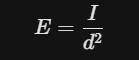
However, because rgb led tube lights are often used as “practicals” (lights visible in the frame), we use them closer to the talent than we would a 5K Fresnel. This means a small 2-foot tube can often feel punchier than a large panel positioned 10 feet away.
2. Color Science: RGB vs. RGBWW
Don’t let the “RGB” in the name fool you. If you are buying rgb led tube lights solely based on how many “neon colors” they can make, you’re missing the point.
For a professional gaffer like me, the “W” (White) is the most important letter. Modern tubes use RGBWW (Red, Green, Blue, Warm White, Cool White) arrays. This allows the light to produce high-quality, full-spectrum white light with a CRI (Color Rendering Index) of 95+.
If your tube only uses RGB to “mix” white, your talent’s skin will look muddy and green under the camera. At StudioLights.org, we always test for TLCI (Television Lighting Consistency Index). If a tube light doesn’t hit