By Lucas Gray | Professional Gaffer & Cinematographer
If you walk onto one of my commercial sets in Vancouver, you’re going to see a sea of black cases with Swiss or German logos on them. We use Profoto and Broncolor because when a client is paying $50,000 a day, a light cannot fail. Period.
But I get emails every week from students and indie photographers asking: “Lucas, I have $300, not $3,000. How do I start lighting?”
For a long time, I didn’t have a good answer. But recently, the budget market has shifted.
Today, I’m looking at the Neewer 300W Strobe (specifically the S101-300W Monolight). It’s an aluminum-bodied, 5600K flash that costs less than a single C-Stand arm on my truck. I took this budget strobe into the studio to see if it’s just a toy, or if it’s a legitimate tool for creators starting their journey.
Here is my honest take.
First Impressions: Built Better Than I Expected
When I hear “budget strobe,” I usually expect cheap plastic that smells like melting electronics.
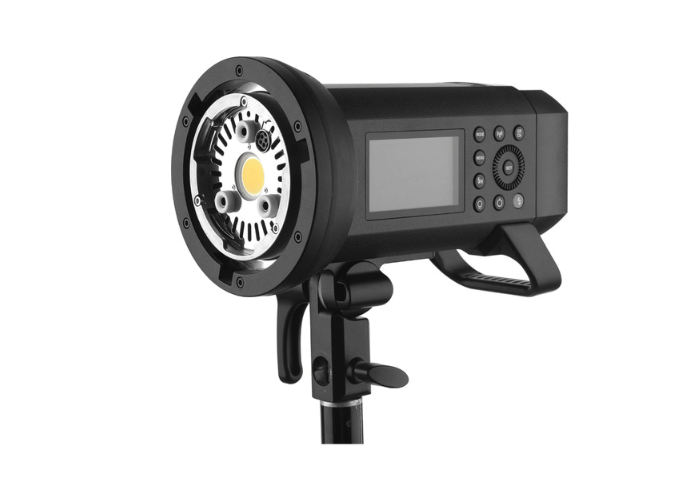
Surprise number one: The Neewer 300W Strobe features an aluminum alloy housing. It feels surprisingly dense and rugged for its size. It measures about 11.6 inches deep and weighs 4.2lb (1.9kg). It’s compact enough to throw into a backpack, but heavy enough that you shouldn’t put it on a flimsy Amazon Basics light stand. Use a real stand, please.
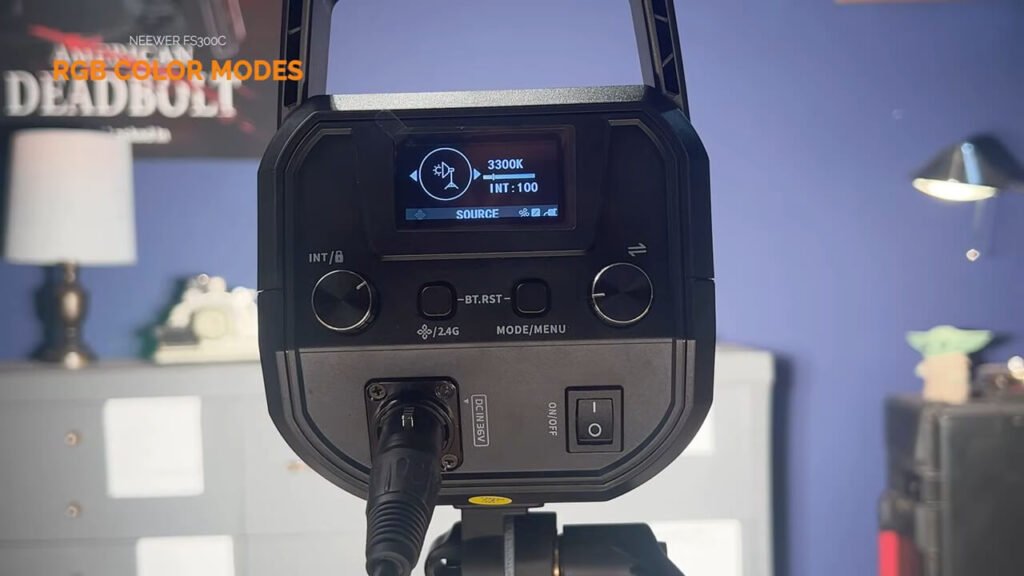
The design is simple. No fancy LCD touchscreens here—just physical knobs and buttons. Honestly? I prefer this. On a dark set, tactile knobs are faster than menu diving.
1. The Output: Is 300Ws Enough?
The headline feature is the 300Ws maximum power. In the world of high-end flash, 300Ws is considered “entry-level,” but let’s be real: for a home studio, a garage setup, or a small commercial space, 300Ws is plenty.
The specs claim a Guide Number (GN) of 58 (ISO 100, 1m). I threw a light meter on it. At full power, this thing kicks.
For portrait photography, product shots, or food photography, you will rarely need more than this. I set it up for a “Still Life” test with a bottle of wine. Even with a large softbox eating up some light, I was shooting at f/11 comfortably.
It has a consistent color temperature of 5600K. I didn’t see massive color shifts as I adjusted the power, which is usually the downfall of cheap strobes. Neewer has tightened up their quality control.
2. The Modeling Lamp: A Hidden Gem
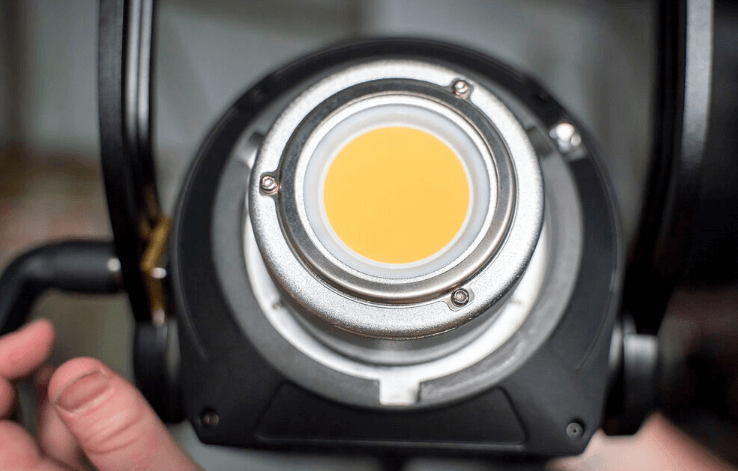
Here is a spec that impressed me: the 150W Modeling Lamp.
Usually, lights in this price range give you a pathetic 75W bulb that is barely bright enough to check focus. Neewer put a proper 150W lamp in the S101.
Why does this matter?
If you are shooting in a darkened studio, the modeling lamp is what allows your camera’s autofocus to lock on. It also lets you preview where your shadows fall before you fire the flash.
- Brightness Levels: It has 9 levels (L1–L9).
- Adjustment: You can set it to be proportional to the flash power (so if you dim the flash, the modeling light dims too).
This feature alone makes it a viable learning tool. You can actually see what you are doing before you press the shutter.
3. Performance: Recycle Time and Cooling
Speed is everything on a fashion shoot. You don’t want to wait for the flash to “recharge.”
The Neewer 300W Strobe lists a recycling time of 0.4–2.5 seconds.
- At lower power (1/8), it’s almost instant. You can pop off shots quickly.
- At full power (1/1), you have that 2.5-second wait.
If you are shooting sports or high-speed dance, this will frustrate you. But for portraits, products, or headshots? It’s perfectly adequate.
The Heat Test:
Neewer claims their “Efficient Heat Dissipation System” prevents overheating even after 300 consecutive full-power flashes.
I didn’t fire 300 shots in a row (I value my eyesight), but I did run it hard for an hour. The fans kicked in, the vents did their job, and the unit stayed cool to the touch. The flash tube seems robust enough to resist high heat and deformation.

4. The Bowens Mount: The Ecosystem Key
This is the most important feature. The S101 uses the Standard Bowens Mount.
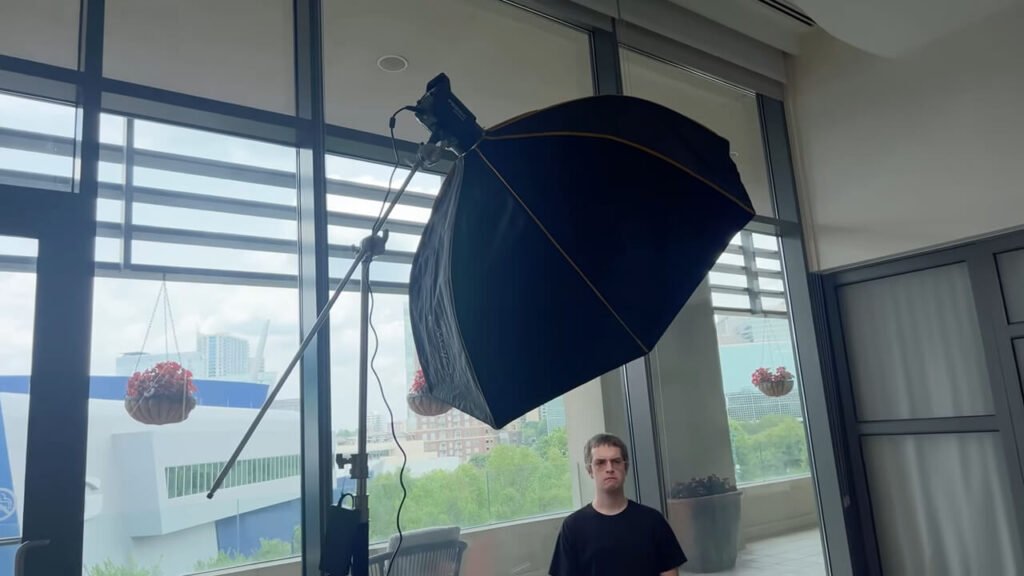
This means you aren’t locked into proprietary, expensive modifiers. You can buy a cheap softbox, a beauty dish, or a snoot from any brand, and it will fit this light.
- Want to use the reflector included in the box? Go ahead.
- Want to slap on a 5-foot Octabox for soft, beautiful portraits? You can.
The mount adapter also allows for a 180° tilt, which is crucial if you need to boom the light overhead for a hair light or product top-down shot.
5. Triggering: Keeping it Simple
The unit has Optical Slave (S1/S2) modes.
- S1: Fires the moment it sees another flash go off.
- S2: Ignores the “pre-flash” of a TTL system and fires on the second flash.
This makes it incredibly easy to add to an existing setup. If you already have a speedlight on your camera, you can use the Neewer S101 as a background light or rim light without buying radio triggers. It just “sees” the light and fires.
Note: It is compatible with the NEEWER RT-16 trigger system (usually sold separately), which I recommend if you want wireless reliability up to 30m.
Cons: What You Are Missing
I have to be Lucas Gray, the grumpy gaffer, for a minute. You are paying under $150 for this light. You are not getting a Profoto B10.
- AC Power Only: This is a monolight, not a battery strobe. It needs a wall outlet. No running into the forest for a shoot unless you have a generator.
- Flash Duration: The duration is 1/2000s–1/800s. This is fine for freezing a person posing, but it won’t freeze a splashing water droplet perfectly.
- No HSS (High Speed Sync): You generally can’t shoot faster than your camera’s sync speed (1/200s or 1/250s). If you want to shoot at f/1.4 outdoors, this isn’t the light for you.
Technical Specifications Table
For those who like the raw data, here is what the S101-300W offers:
| Feature | Specification | Notes |
| Model | S101-300W | Studio Monolight |
| Max Power | 300Ws | Adjustable 7.0–10 (1/8–1/1) |
| Guide Number | GN58 | ISO100, 1m |
| Color Temperature | 5600K ± 200K | Daylight Balanced |
| Modeling Lamp | 150W | 9 Brightness Levels |
| Recycle Time | 0.4 – 2.5s | Dependent on power level |
| Flash Duration | 1/2000s – 1/800s | |
| Mount Type | Bowens Mount | Universal compatibility |
| Dimensions | 6.2″ x 10.6″ x 11.6″ | Compact design |
| Weight | 4.2lb / 1.9kg | Aluminum Alloy body |
| Sync Mode | Optical Slave S1/S2 | Optional RT-16 Trigger |
Final Verdict: Who is the Neewer 300W Strobe For?
The Neewer S101-300W is the perfect “First Studio Light.”
If you are building a home studio for product photography (selling stuff on eBay/Etsy/Shopify) or starting a portrait business in your garage, this light is a steal. It offers plenty of power, the versatility of the Bowens mount, and a modeling light that is actually useful.
It allows you to learn the fundamentals of lighting—ratios, diffusion, hard vs. soft light—without taking out a loan.
Lucas’s Advice: Buy two of them. Get a couple of softboxes and some C-stands. You’ll have a setup capable of producing professional-looking images for a fraction of the cost of one “pro” light head.
Just don’t drop it in a puddle, and it should serve you well for years.
Lucas Gray is the lead writer for StudioLights.org. When he’s not testing budget gear, he’s drinking black coffee and untangling cables on set.