1. Introduction: Why Lighting Dictates Product Premium
In the world of commercial imagery, lighting isn’t just about visibility—it’s about perceived value. When you are tasked with shooting a luxury watch or a complex cosmetic bottle, your lighting for product photography setup is responsible for defining textures, creating depth, and establishing the “desire” factor.
Choosing between strobes and continuous light is essentially choosing between two different workflows and two different philosophies of light control.
2. Strobes (Flash): The Heavy Hitter of Still Life
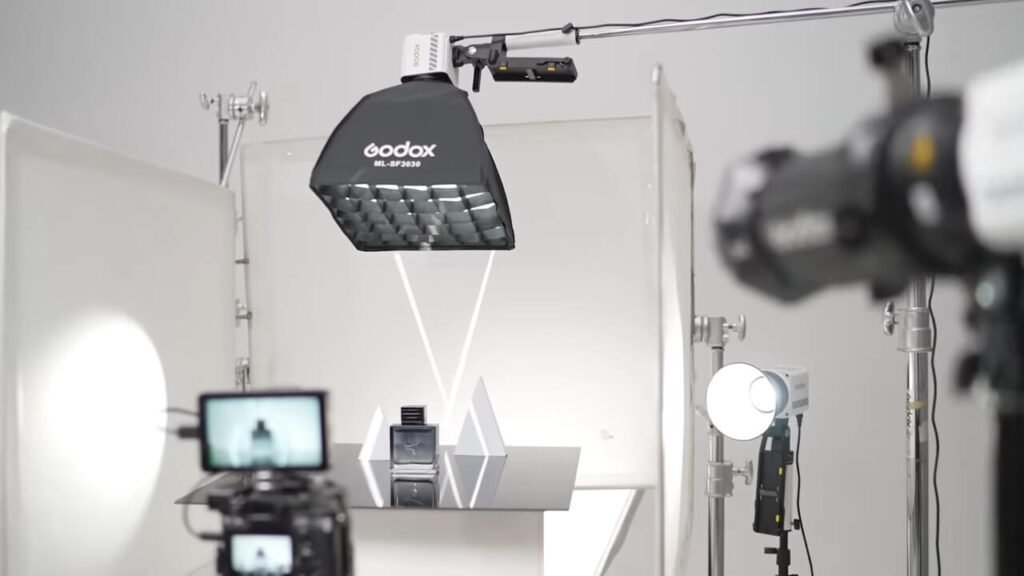
Even in 2026, professional studios aren’t ditching their strobes anytime soon. For the photographer chasing ultimate image quality and sharpness, a strobe is like a heavy sledgehammer—it delivers a massive amount of light in a fraction of a second, allowing you to dominate every pixel.
The Power of $f/11$ and Beyond
One of the biggest challenges in lighting for home studio or professional commercial spaces is maintaining a deep depth of field. To get a product sharp from front to back, you often need to stop down to $f/11$ or $f/16$. Constant lights often struggle to provide enough intensity for these small apertures without ramping up your ISO. Strobes, however, provide a “wall of light,” allowing you to shoot at ISO 100 with zero noise and maximum dynamic range.
Freezing Time: The Physicist’s Choice
If your brief includes a “splash” shot—liquid pouring into a glass or powder exploding around a sneaker—strobes are your only real option. The “flash duration” (the speed at which the light pulse is released) is what actually freezes the motion, not your camera’s shutter speed. This physical freeze is something that even the most powerful LEDs in 2026 can’t fully replicate for high-speed action.
Unmatched Color Purity
High-end strobes are famous for their color consistency. When you are shooting a catalog of 500 items, you need the white balance to be identical from shot 1 to shot 500. Professional strobes offer a spectrum that is naturally full, ensuring that the “Red” on the product is exactly the “Red” on the screen.
3. Continuous LED: The Precision Scalpel
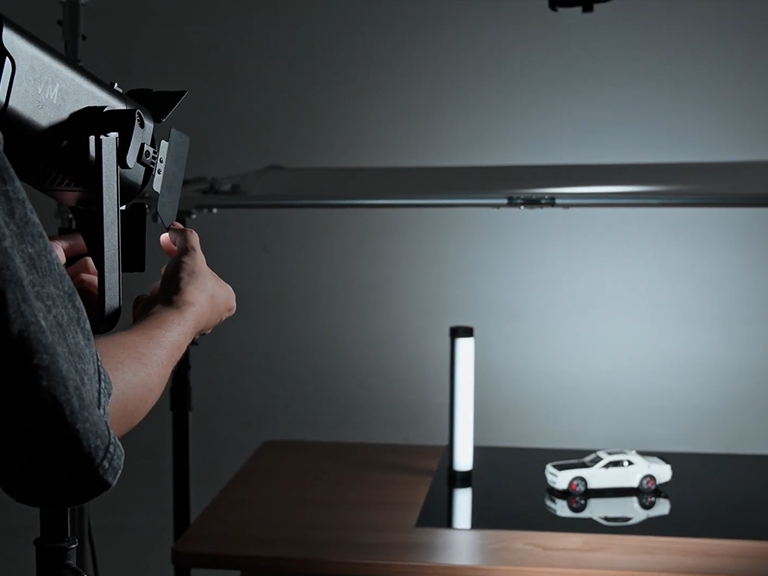
If strobes are the sledgehammer, modern LEDs are the precision scalpel. The rise of COB (Chip-on-Board) technology has fundamentally changed how we approach lighting for product photography.
WYSIWYG (What You See Is What You Get)
The biggest advantage of continuous light is its intuitiveness. As you move the light stand, you see the specular highlights move across the product’s surface in real-time. This is invaluable when shooting highly reflective objects like jewelry or glassware. You aren’t “guessing and checking” with test shots; you are sculpting with light as you see it.
The Hybrid Demand: Video and Stills
Clients today rarely want only a still photo. They want a 4K “B-roll” clip for Instagram Reels or a TikTok “unboxing” video. If your lighting for product photography setup uses continuous LED, you can switch your camera from Stills to Video mode instantly. For the modern creator, this efficiency is a massive competitive advantage.
Heat and Safety
Unlike the old tungsten “hot lights” of the 80s, modern LEDs run incredibly cool. This is a lifesaver when shooting food (where heat can make lettuce wilt or chocolate melt) or when working in small home studios where a hot strobe head can quickly turn the room into a sauna.
4. The Direct Comparison: Five Key Dimensions
To help you make the right choice, let’s look at the “tale of the tape” between these two systems.
I. Power and Exposure
Strobes win on raw output. Because the light is condensed into a millisecond, it overpowers any ambient room light. With continuous LED, you often need to black out your room entirely to ensure your house lights don’t contaminate the color of your lighting for product photography setup.
II. The Inverse Square Law in Practice
All light follows the same mathematical rule. The intensity ($E$) of light is inversely proportional to the square of the distance ($d$):
Because strobes have more power ($I$), you can place them further away from the subject. This creates a more even “fall-off” of light across larger products. LEDs, being less powerful, often need to be placed closer to the product, which can sometimes interfere with your camera’s positioning.
III. Sync Speed vs. Global Shutter
With strobes, you are limited by your camera’s flash sync speed (usually 1/200s or 1/250s) unless you use High-Speed Sync (HSS). Continuous light allows you to use any shutter speed your camera supports, which is useful if you are trying to use a very wide aperture in a bright room.
IV. Light Modifiers
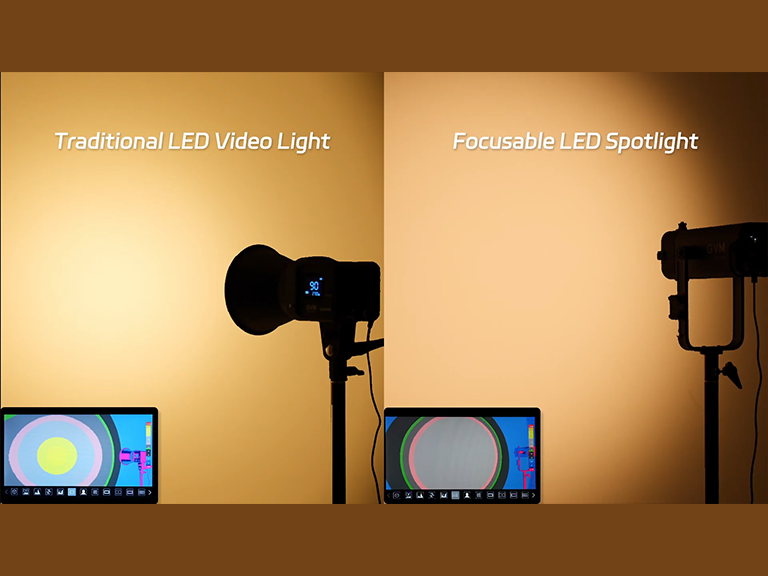
Both systems support Bowens-mount softboxes, grids, and snoots. However, because LED is a constant source, using a “Fresnel” or a “Spotlight Mount” allows for incredibly theatrical, hard-edged light that is much harder to preview with a strobe’s modeling light.
5. The Decision Matrix: Which One Should You Buy?
As a pro, I recommend choosing your gear based on the material you shoot most often.
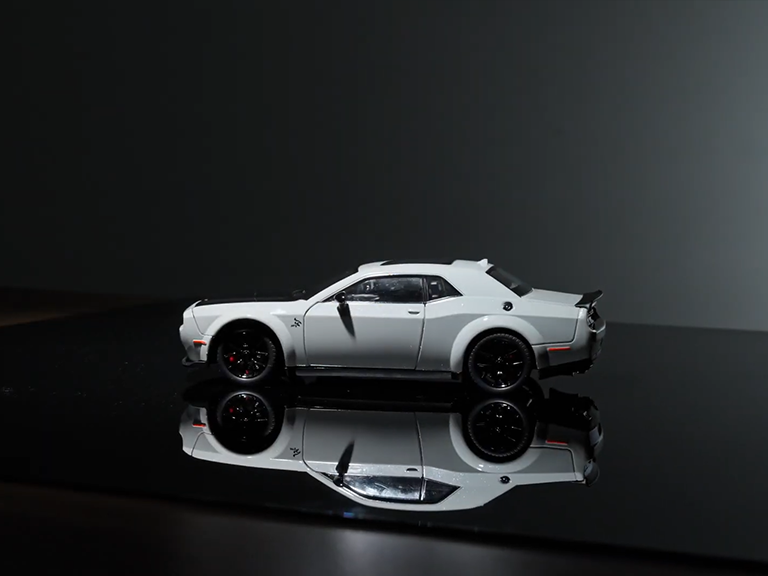
- Scenario A: Jewelry, Watches, and Chrome
- Recommendation: Continuous LED.
- Why: You need to see exactly where the “catchlights” are hitting the metal facets. Continuous light saves you hours of micro-adjustments.
- Scenario B: Large Apparel, Home Appliances, and Models
- Recommendation: Strobes.
- Why: You need to fill large softboxes and maintain a deep depth of field. The power of a strobe makes lighting a large white background effortless.
- Scenario C: Food and Beverage
- Recommendation: Hybrid.
- Why: Use LED for the “hero” shot to keep the food looking fresh, but keep a strobe handy for that “splash” of wine or the “steam” rising from a dish.
6. The 2026 Trend: The Hybrid Workflow
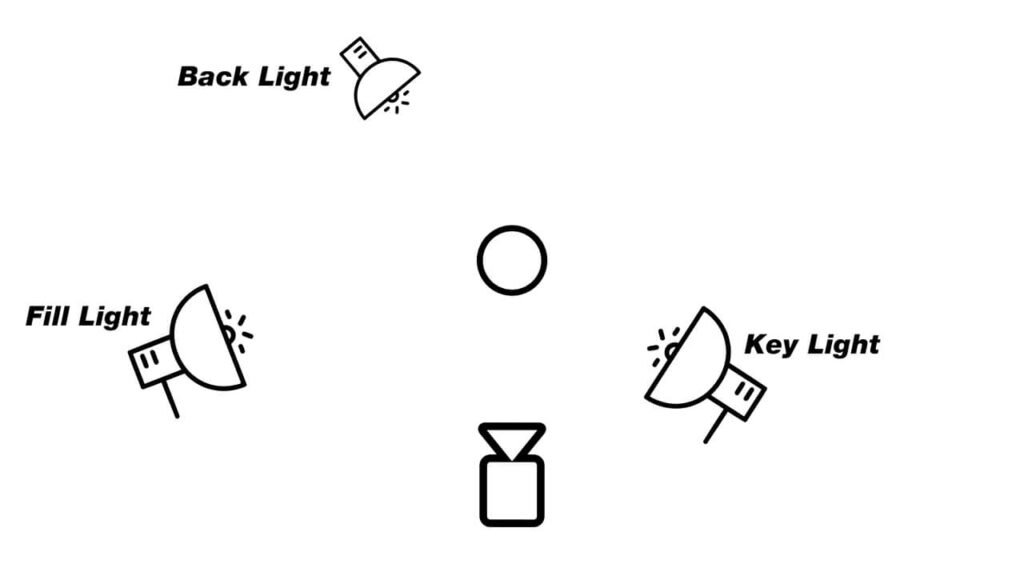
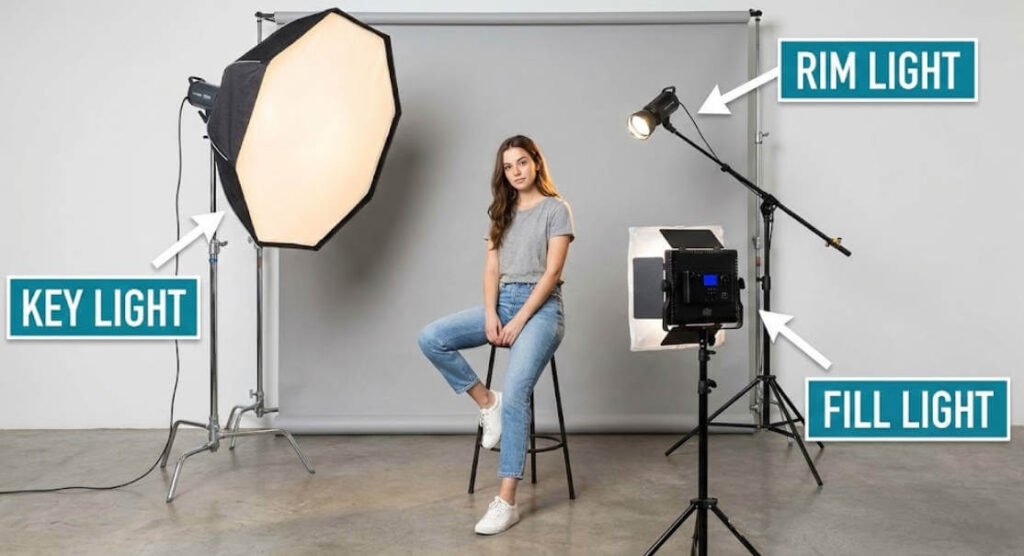
The most successful studios in 2026 don’t choose—they combine. The ultimate lighting for product photography workflow involves using a high-powered strobe as your “Key Light” for the overall exposure and a small, precise RGB LED light (like the GVM-QX6) as a “Kicker” or “Rim Light.”
This allows you to get the color accuracy and “punch” of the strobe while using the LED to add a surgical pop of color or a specific highlight on a label that would be too difficult to “blindly” place with a flash.
Conclusion: Lighting is the Story
At the end of the day, lighting for product photography is about storytelling. Are you telling the story of a rugged, powerful tool, or a soft, luxurious cosmetic?
- Go with Strobes if you need raw power, frozen motion, and clinical color consistency for large-scale production.
- Go with Continuous LED if you value intuition, video versatility, and a faster “set-up-to-delivery” timeline.
Lucas’s Final Word: Never skimp on your modifiers. Whether you use a $5,000 flash or a $200 LED, it’s the softbox, the scrim, and the grid that actually define the light. Invest in high-CRI sources, understand your physics, and the clients will follow.