Godox AD200 is one of the most frequently asked-about lighting tools I’ve received from creators across all skill levels. As a professional gaffer, I’ve gotten countless private messages asking whether the Godox AD200 is worth buying, how it performs for studio and on-location shoots, and if it’s truly reliable for everyday content creation. To answer all these common questions in one comprehensive guide, I’ve put together this in-depth breakdown tailored for filmmakers, YouTubers, and home studio creators.
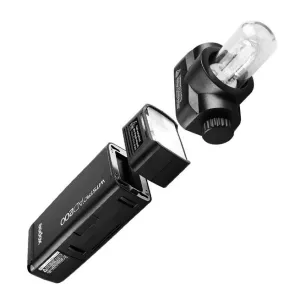
At StudioLights.org, we always prioritize real-world usability over hollow spec sheets, focusing on gear that delivers genuine cinematic results without overcomplicated, high-cost setups. Before jumping into its practical lighting performance, color accuracy, and on-set pros and cons, let’s start with its core key specifications. The Godox AD200 stands out with an industry-leading power-to-weight ratio: it packs a strong 200Ws lighting output while weighing just 560 grams without the head attached. This lightweight yet high-power design is why it went viral when it first launched. Even with a flood of new portable strobes released in recent years, its balanced parameters and outstanding portability still make it a highly competitive choice for independent creators and amateur studio shooters.
Table of Contents
Key Specifications at a Glance
Before diving into real-world performance, here is what the Godox AD200 brings to the table on paper. The standout figure is 200Ws of output in a body that weighs just 560 grams without the head attached. That power-to-weight ratio is what originally turned heads when the AD200 first launched, and it remains competitive even against newer entrants.
| Specification | Detail |
|---|---|
| Power Output | 200 Ws |
| Flash System | Godox X Wireless System (2.4 GHz) |
| TTL Support | Yes (Canon, Nikon, Sony, Fujifilm, Olympus/Panasonic, Pentax) |
| High-Speed Sync (HSS) | Yes, up to 1/8000s (camera/trigger dependent) |
| Battery | Rechargeable lithium-ion (WB29, 14.4V / 2900mAh) |
| Full-Power Flashes per Charge | Approximately 500 |
| Recycle Time | 0.01–2.1 seconds (full power) |
| Color Temperature | 5600K ± 200K (bare bulb), ~5600K (fresnel head) |
| Flash Duration | 1/220s – 1/13,000s (t0.1) |
| Weight | 560 g (body only, without head) |
| Dimensions | 168 × 75 × 50 mm (body only) |
| Mount System | Proprietary interchangeable head mount |
| Wireless Range | Up to 100 meters |
| Groups/Channels | 5 groups (A–E), 32 channels |
The Interchangeable Head System: Why It Matters
The AD200’s signature feature is its swappable head design. Instead of locking you into one type of light, Godox gives you four distinct heads that turn the same body into four different tools. This modular approach means you are essentially buying a lighting system, not just a flash.
The bare bulb head (often called the ‘bulb’ head) is the default configuration and the one most photographers use most often. It throws light in all directions, mimicking the behavior of a traditional studio monolight. Inside a softbox or umbrella, the bare bulb head fills the modifier evenly with no hotspot. For portraits and group shots where soft, wrap-around light is the goal, this is the head you will reach for.
The H200R is a round fresnel head that produces a focused, punchy beam. It pairs naturally with the Godox AK-R1 accessory kit, which includes a dome diffuser, bounce card, snoot, barn doors, honeycomb grid, and color gel holder. Wedding and event photographers favor this head for its directional control and the ability to throw light across a dance floor or through a crowd at a reception.
The AD-S200 is a stick-style head with a long flash tube that radiates light 360 degrees around its axis. This unusual design is perfect for placing inside small spaces — think product photography tents, restaurant interiors, or tight corners where a traditional flash simply cannot fit. It also works well as a hair light or accent light when clamped to a C-stand and positioned behind a subject.
The R200 is a ring flash head that mounts directly to your lens, producing the signature shadowless, halo-effect catchlight that fashion and beauty photographers love. While ring flash is a niche look, having access to it without buying a separate dedicated ring light is a genuine cost saver.
Swapping heads takes about three seconds: press the release button, slide the head off, slide the new one on. The locking mechanism is solid, and there is no play or wobble once seated.
Godox X Wireless System: Control from Your Hot Shoe
The AD200 is natively integrated into the Godox X wireless ecosystem, which means it talks directly to any Godox X-series transmitter without needing an external receiver. Popular triggers include the XPro II, X2T, and the tiny X3 touchscreen trigger.
Setup is straightforward: mount a compatible trigger on your camera, set both the trigger and the AD200 to the same channel and group, and you can control power (in 1/3-stop increments), modeling lamp, and group assignment from the trigger. TTL mode handles exposure automatically when you need speed, while manual mode gives you full control for consistent results in controlled environments.
One practical advantage is cross-brand compatibility. If you shoot Canon today and switch to Sony tomorrow, you do not need new flashes — just a new trigger for the new camera body. The AD200 stays the same. For photographers who shoot multiple systems or rent gear, this flexibility is worth real money over time.
High-speed sync works up to 1/8000 second, which is critical for overpowering the sun in outdoor portraits. At full power in HSS mode you will notice a drop in effective output, but for head-and-shoulders portraits in bright midday light, the AD200 at half or quarter power in HSS delivers usable results.
AD200 vs AD200Pro vs AD200Pro II: Which One Should You Buy?
Godox has released three iterations of the AD200 line, and the used market means all three are available at different price points. Here is how they compare across the features that actually matter in the field:
| Feature | AD200 | AD200Pro | AD200Pro II |
|---|---|---|---|
| Power Output | 200 Ws | 200 Ws | 200 Ws |
| Color Temperature Stability | ±200K | ±100K | ±100K |
| Modeling Lamp | LED, fixed brightness | LED, adjustable | LED, adjustable (brighter) |
| Flash Duration (t0.1) | 1/220s – 1/13,000s | 1/220s – 1/15,000s | 1/220s – 1/15,000s |
| Stable Color Mode | No | Yes | Yes |
| USB-C Charging | No (external charger) | No (external charger) | Yes (direct USB-C) |
| TCM Function | No | Yes | Yes |
| Group Buttons | Physical wheel | Physical buttons | Physical buttons |
| Screen | LCD | LCD | LCD (improved UI) |
| MSRP (body only) | $299 | $349 | $369 |
| Best For | Budget buyers, used market | Color-critical work | Latest features, USB-C workflow |
If you are buying new today, the AD200Pro II is the default choice — the USB-C charging alone is a workflow upgrade worth the small price premium. But if you find a clean used AD200 (not Pro) for under $200, that is a genuinely good deal and the core performance is identical. The original AD200 still outputs the same 200Ws, still works with all four heads, and still integrates with every X-series trigger.
The AD200Pro sits in an awkward middle ground: it adds stable color mode and TCM but keeps the external charger. Unless you find one at a significant discount versus the Pro II, it is harder to recommend as a new purchase.
Real-World Performance: What It Gets Right and Where It Falters
After spending hundreds of hours in the field with the AD200 series across weddings, engagement shoots, and product photography, here is the honest assessment.
For single-subject portraits outdoors, the AD200 is plenty of power. Paired with a 38-inch octabox on a light stand, you can shoot at ISO 100, f/5.6, and comfortably overpower ambient light in open shade. Full-length portraits at wider apertures are no problem. The recycling time at full power — around 2.1 seconds — is not fast enough for burst shooting during a first dance or runway show, but for posed portraits and slower-paced event coverage, it keeps up without frustration.
The bare bulb head inside a modifier produces a beautiful, soft light that is indistinguishable from much larger strobes. If you do not tell your client what you used, they cannot tell the difference between a Godox AD200 and a Profoto B10 inside the same softbox.
Where the AD200 shows its limits is in large group shots and overpowering harsh direct sun at a distance. For a family of 12 at f/8 in bright noon light, you will want more power — this is where the AD400Pro or AD600Pro enter the conversation. The AD200 is best understood as a one or two-person strobe, not a group strobe.
Battery life is a highlight. Godox claims 500 full-power flashes, and in practice the number holds up. A full-day wedding rarely depletes a battery. The external charger that comes with the AD200 and AD200Pro is slow (about 2.5 hours for a full charge), which makes the USB-C charging on the AD200Pro II a meaningful ergonomic upgrade.
A Year With the Godox AD200: The Strobe That Never Leaves My Wedding Bag
I’ve owned two Godox AD200s for a full year now. In that time they’ve shot every wedding on my calendar, survived a few drops at the hands of my assistants, and crossed the country more times than I can count. Here’s what a year of real-world use actually looks like.
What Makes It Indispensable
Serious power in a body you can actually carry
The AD200’s party trick is simple: 200 w/s of output packed into something the size of a pocket strobe. To put that in perspective, most pocket flashes top out somewhere between 50 and 75 w/s. That gap is the whole argument. I get output that used to require a much bigger, heavier kit — without hauling that kit around.
The value proposition is almost unfair
Shop around for another 200 w/s strobe and you’ll find price tags running two to three times higher. There isn’t much of a decision to make here. I bought two immediately, and my older speedlights have been collecting dust ever since.
It’s an ecosystem, not a one-off purchase
This matters more than people expect. Buying an AD200 doesn’t mean adopting an orphaned product — it means joining the Godox system, with all the cross-compatibility that implies. Equally important for me: it works seamlessly with the MagMod gear I’d already invested in (MagBox, MagRing, MagGrids, CTO gels). Nothing I owned became obsolete.
Battery life that ends the AA nightmare
If you’ve ever spent the evening before a wedding feeding batteries into a 16-bay charger, the AD200’s lithium-ion pack feels like liberation. A single charge runs for hours. I’ve covered three-day Indian weddings without plugging in overnight — and never once worried about it.
What I’d Change
I don’t have a long list of grievances, but two things are worth flagging:
The modeling light needs work. It gets mentioned as a feature, but in practice it’s too weak to be genuinely useful. With real development behind it, it could become a solid tool for pre-visualizing light or aiding focus. Right now it’s close to ornamental.
Misfires happen. I’ve had my share, though none ever cost me a frame or disrupted a shot sequence. The one scenario where I notice them is HSS under bright sun — worth knowing before you stake a critical moment on it.
Worth saying: the “third-party flashes are unreliable” reputation gets thrown around a lot. In my experience that’s a broader stigma against third-party gear rather than a fair verdict on this particular light.
Four Setups I Run at Nearly Every Wedding
1. Doubling Up to Beat the Sun
“Overpower the sun at 1/1” is one of those Lighting 101 rules that sticks with you. The catch with speedlights is physical: you can’t get the light close enough to the subject to pull it off, short of building a composite in post.
My workaround is to mount both AD200s into one MagRing, effectively creating a 400 w/s source. That buys me enough headroom to keep the light well outside the frame on wider shots — and still win against midday sun.
2. A Two-Light Recipe for Receptions
This one came from SLR Lounge’s Wedding Photography Training System, and it’s now automatic for me. It’s a pin-lighting setup: two lights, two targets.
Place your stands thoughtfully — and whatever you do, keep them out of the guests’ sightlines. One light goes on the couple, one on the speaker. A small piece of etiquette that saves a lot of hassle: ask speakers up front to stay within their designated spot, so you’re not re-aiming lights mid-toast. Want a tighter throw? Stack your MagGrids to narrow the beam.
3. Manufacturing Golden Hour on Demand
Golden hour is the light everyone wants and the light nobody can schedule. The way around it is to study what sunlight actually does — how it wraps a subject, where it drops shadows — then rebuild that behavior with off-camera flash.
For one of the frames in this article, I ran two AD200s stacked in a MagRing, somewhere between 1/2 and 1/1 power, with CTO gels to bring the color temperature in line with late-day sun. The result is a golden hour that shows up whenever I need it to.
4. Backlighting for a Dramatic Night Closer
Stealing the couple away for a nightcap portrait is one of the best ways to end a wedding day — and one of the most reliable ways to rescue a forgettable venue.
The move: hide one AD200 behind them and push the power. It lights the environment and separates the couple with a clean rim of light in a single stroke. In that shot it was barely drizzling; the backlight is what let me catch both the falling rain and the tree behind them.
Durability, One Year On
These two lights have taken a beating. Cross-country travel, a few hard drops during engagement sessions, and every wedding I’ve shot for over a year. Every sample image in this article came from a real wedding or engagement session, shot with a mix of MagMod modifiers.
Pros and Cons Summary
No strobe is perfect, and the AD200’s trade-offs are well-documented. Here is a balanced summary:
| Pros | Cons |
|---|---|
| Compact and lightweight (560 g body) | 200 Ws insufficient for large groups in bright sun |
| Interchangeable 4-head system | External battery charger (pre-Pro II models) |
| Built-in 2.4 GHz wireless receiver | No AC power option (battery only) |
| TTL + HSS across 6 camera brands | Fanless — no active cooling for long sessions |
| ~500 full-power flashes per charge | Proprietary head mount (not Bowens S-mount) |
| Cross-brand trigger compatibility | Plastic body (durable, but not metal) |
| Excellent value for the output | LED modeling lamp is dim compared to COB lights |
| Wide accessory ecosystem (AK-R1 kit, S2 bracket) | No built-in video light functionality |
Essential Godox AD200 Accessories
The AD200 body is just the starting point. Building out a functional kit means adding the right accessories. Here is what matters:
At minimum, get the Godox S2 speedlite bracket. This adapter lets you mount the AD200 on any Bowens S-mount modifier — softboxes, beauty dishes, reflectors — dramatically expanding your modifier options beyond the native AD200 heads. Without it, you are limited to modifiers that clamp directly to the head, which is a small selection.
For the H200R fresnel head, the AK-R1 accessory kit is nearly essential. It includes a magnetic dome diffuser, bounce card, snoot, barn doors, honeycomb grid, gel holder, and color gels. The entire kit fits in a small pouch and gives you creative control that rivals much more expensive systems.
A sturdy light stand is non-negotiable. With a softbox mounted, the AD200 catches wind more than you would expect. A C-stand or a heavy-duty air-cushioned stand with a sandbag is the minimum for outdoor use. Godox also sells their own 260T and 280F stands, which are adequate for studio work but may feel flimsy outdoors.
For photographers building a two-light setup, adding a second AD200 (or pairing one AD200 with an AD100Pro as a rim or hair light) is a natural expansion path. Two lights open up key-plus-fill, clamshell, and cross-lighting setups that one light simply cannot achieve.
Who Should Buy the Godox AD200
The AD200 is not for everyone, but for the right photographer it is the best value in portable lighting.
The ideal user is a wedding or portrait photographer who shoots on location and needs more power than a speedlight without the bulk of a full-size monolight. It fits in a shoulder bag alongside two lenses and a camera body. For engagement shoots, bridal prep, and reception details, it is the right tool.
Product and still-life photographers with a small studio will also appreciate the AD200. Two or three AD200 bodies with the AD-S200 stick head can light a tabletop scene from multiple angles without taking up the floor space that AD600-size strobes demand.
Who should skip the AD200? Commercial photographers shooting large groups or full-body fashion in bright ambient light need more power — look at the AD400Pro or AD600Pro instead. Studio photographers who shoot at high frame rates all day will be frustrated by the 2.1-second recycle time at full power. And videographers should look elsewhere entirely — the AD200 has no continuous light capability beyond the dim LED modeling lamp.
At its current street price of around $299 for the base AD200 body (or $369 for the AD200Pro II), it occupies a unique position: significantly cheaper than Profoto or Broncolor equivalents, significantly more powerful and versatile than any speedlight, and part of an ecosystem that can grow with you from one light to a full multi-light studio.
Frequently Asked Questions
Is the Godox AD200 powerful enough for outdoor portraits?
Yes, for one or two-subject portraits the Godox AD200 provides enough power to overpower ambient light in open shade and overcast conditions. For large groups or full-body shots in direct midday sun at small apertures, consider the Godox AD400Pro or AD600Pro.
What is the difference between the Godox AD200, AD200Pro, and AD200Pro II?
All three share the same 200Ws output and interchangeable head system. The AD200Pro adds stable color mode, TCM, and an adjustable modeling lamp. The AD200Pro II further adds USB-C charging and a refined interface. Used AD200 units offer the best value for budget buyers.
Can I use Godox AD200 with Canon, Nikon, and Sony cameras?
Yes, the Godox AD200 works with Canon, Nikon, Sony, Fujifilm, Olympus/Panasonic, and Pentax systems. You only need the corresponding X-series trigger for your camera brand. The strobe body itself is brand-agnostic.
Does the Godox AD200 work with Bowens mount softboxes?
Not directly. The AD200 uses a proprietary head mount. To use Bowens S-mount modifiers, you need the Godox S2 speedlite bracket, which adapts the AD200 to the Bowens mount. This is a popular and affordable accessory.
How many flashes does the Godox AD200 battery last?
Godox rates the WB29 lithium-ion battery at approximately 500 full-power flashes. In real-world use at mixed power levels, most photographers get through a full day of shooting without needing a spare. Recharge time with the included charger is about 2.5 hours.