The Profoto B10 vs B10X question comes up constantly, because the original B10 is one of the most popular battery-powered flashes ever made, and it is now discontinued. When I first learned photography, the B10 was the light I started on, so I know why people still ask about it.
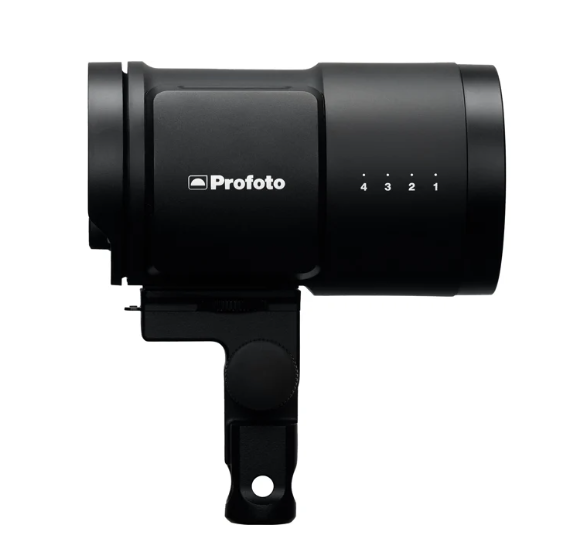
This independent guide compares the two using Profoto’s published specifications and launch coverage, explains why the B10 disappeared, and helps you decide between a used B10 and a B10X. It is a spec-based comparison, not a lab test, so confirm current availability and pricing before you buy.
Table of Contents
Quick Verdict
The two lights share the same 250Ws flash engine, the same lens-sized body, the same battery, and the same modifier system. The B10X is mainly a continuous-light and workflow upgrade. If you shoot stills with flash, a clean used B10 gives you nearly identical flash performance for less money. If you also record video or rely on the built-in LED, the B10X is the better buy.
Why Was the Profoto B10 Discontinued?
Profoto’s product page marks the B10 as discontinued and no longer available for purchase, without explaining why. The most likely reason is simple succession. The B10X and B10X Plus were announced as successors that build on the B10 and B10 Plus while adding more power, better performance, and new features. The original B10 was renamed the B10 Classic once the new model appeared. Profoto has not published a detailed reason, so treat this as the logical explanation rather than an official statement.
The B10 was clearly successful. Coverage at the time of the B10X launch described the B10 and B10 Plus as exceedingly popular products. That popularity explains why so many people still search for it today, and why the used market matters.
Profoto B10 vs B10X Specifications
This table uses the specifications from Profoto’s own product pages:
| Specification | Profoto B10 | Profoto B10X |
|---|---|---|
| Status | Discontinued | Check current availability |
| Max flash energy | 250 Ws | 250 Ws |
| Energy range | 10 f-stops (0.25 to 250 Ws) | 10 f-stops (0.5 to 250 Ws) |
| Control increments | 0.1 f-stop | 0.1 f-stop |
| Recycling time | 0.05 to 1.35 s | 0.05 to 1.3 s |
| Continuous light (LED) | 2,500 lm | 3,200 lm |
| Color temperature | 3000K to 6500K (±500K) | 3000K to 6500K (±500K) |
| CRI | 90 to 96 | 90 to 96 |
| Battery | Up to 400 full-power flashes, up to 75 min continuous light | Same |
| Charge time | 1.5 hours | 1.5 hours |
| Wireless | AirX, 2.4 GHz, Bluetooth | AirX, 2.4 GHz, Bluetooth |
| Air channels | 20 | 100 |
| Sync port | No (USB-C only) | No (USB-C only) |
| Size | 17.5 x 11 x 10 cm | 17.5 x 11 x 10 cm |
| Weight | Not listed in the source | 1.5 kg / 3.3 lbs with battery and stand adapter |
What Actually Changed in the B10X
Continuous Light
This is the headline improvement. Launch coverage described a jump in continuous light from 2,500 lumens to 3,250 lumens, roughly a 30% increase. Profoto’s spec page lists 3,200 lm, so expect a figure in that range. The B10X lists 10,000 lux at one meter with the OCF Magnum reflector and 1,100 lux without it. For video interviews or dim-scene focusing, the extra output matters.
Recycling Speed
Sources disagree here. Launch coverage said recycling improved from a 0.05 to 2 second range to 0.05 to 1.2 seconds. Profoto’s own spec pages, however, list 1.35 seconds for the B10 and 1.3 seconds for the B10X, a small difference. Until you test both, assume the improvement is modest.
Wireless and Operating Details
Both lights include AirX Bluetooth and work with Profoto Air remotes and the A-series flashes. The B10X lists 100 Air channels versus 20 on the B10, and Bluetooth control works from 0.1 to 30 meters. The B10X also lists an operating temperature range of +10°C to +35°C, or -10°C to +50°C with reduced performance.
What Did Not Change
Launch coverage noted the two share the same form factor, the same 1.5 kg weight, the same 400-flash battery life, and the same 250Ws flash power. Flash output at two meters (ISO 100) is identical on both pages: f/11.9 without a reflector and f/22.7 with the OCF Magnum reflector. For pure flash photography, the two lights are nearly equal.
Where the Plus Models Fit
Profoto also sells higher-power versions. The B10X Plus doubles the flash power to 500 Ws, weighs 1.9 kg, and has half the battery life in full-power flashes. If you regularly need more power for daylight or large modifiers, the Plus is the step up, though it costs more and is heavier.
Independent Review: Strengths and Limitations
Strengths (both models)
- Lens-sized, cordless design that fits in a camera bag
- Fine 0.1-stop power control across a 10-stop range
- Built-in LED with adjustable color temperature
- Access to more than 120 Profoto light shapers, including the OCF range
- Swappable battery that can charge while in use
- Control from the Profoto app, with firmware updates over USB-C or Bluetooth
Limitations
- No sync port, so you need a Profoto Air remote or AirX Bluetooth to fire it
- The continuous light is helpful but is not a replacement for a dedicated video light
- Premium pricing compared with third-party alternatives
- At launch, the B10X was priced at $1,995 and the B10X Plus at $2,295. The earlier B10 and B10 Plus launched at $1,795 and $2,195. Prices change, so check current listings.
Real-World Use Case: A Dusk Location Portrait
Here is an illustrative scenario, not a test result. Imagine a portrait session outdoors near sunset with the light on a stand and an OCF softbox, about two meters from the subject.
You set the camera to a low ISO and use high-speed sync to darken the sky, then add the flash as the key. Because both lights have the same flash output (f/11.9 at two meters, ISO 100, without a reflector), either model handles this setup equally well. The difference appears in the quieter moments. Between frames, you can turn on the LED, set the color temperature to match the fading sky, and use it to help your subject see the light and help your camera focus. The B10X gives you a brighter continuous light for that job, which is useful if you also plan to record behind-the-scenes clips or a short interview on the same shoot.
Which Should You Buy?
- Choose a used B10 if you mostly shoot stills with flash, want the lowest cost of entry into the Profoto ecosystem, and can find a healthy battery. Check the battery’s condition first, since it is the wear item.
- Choose the B10X if you want the brighter LED for hybrid photo and video work, more Air channels, and a currently supported product.
- Consider the B10X Plus if you need more power than 250Ws, and can accept the extra weight and shorter battery life.
Conclusion
The Profoto B10 vs B10X decision is really a decision about continuous light and budget. The B10 was discontinued because the B10X succeeded it, not because the flash was weak. The B10X keeps the same 250Ws flash, size, weight, battery, and modifier support, and adds a brighter LED and more wireless channels. Stills shooters can save money with a used B10, while hybrid shooters will get more from the B10X.
Ready to decide between the Profoto B10 vs B10X? Compare current used and new prices, check the battery’s condition, and choose the light that matches how you shoot.
FAQ
Is the Profoto B10 still available?
Profoto lists it as discontinued and not available for purchase. You can find used units through resellers.
Is the B10X brighter than the B10 for flash photography?
No. Both list 250Ws and identical f-stop output at two meters. The extra brightness applies to the LED continuous light.
Do the B10 and B10X use the same battery?
Yes. Both list the same Li-Ion battery, up to 400 full-power flashes, and a 1.5-hour charge time.
Can I use the same modifiers on both?
Yes. Both work with the OCF range and more than 120 Profoto light shapers.
Do I need a trigger?
Yes. Neither has a sync port, so use a Profoto Air remote, an A-series flash, or AirX Bluetooth control.