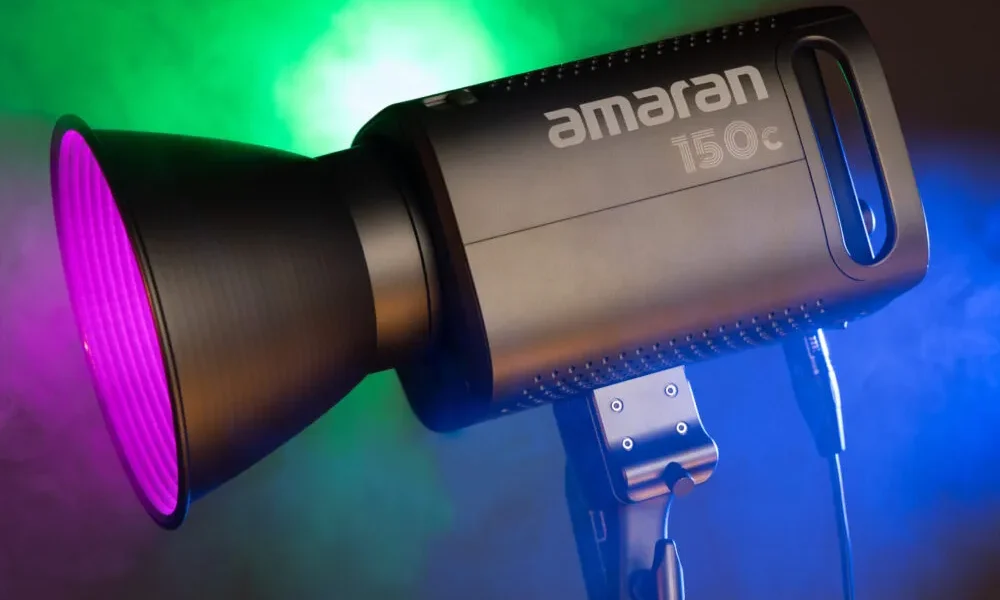
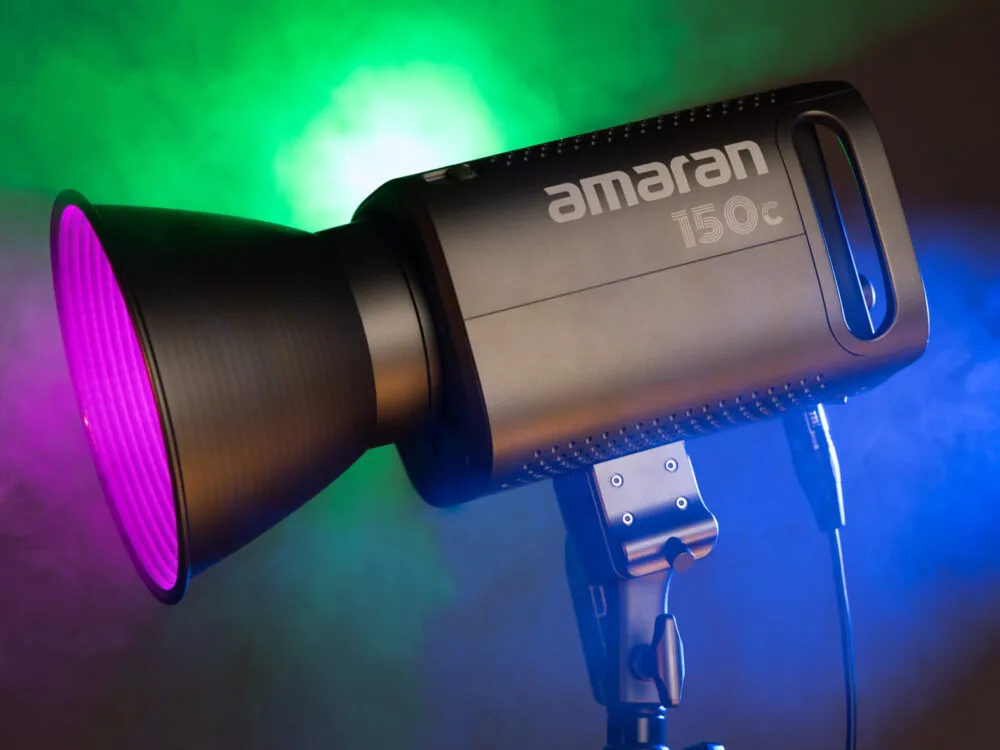
Choosing a continuous light for youtube lighting usually comes down to two things: how much creative control the fixture gives you, and how far your budget stretches while you get it. The amaran 150c and the GVM YU150R sit in the same 150W RGB point-source category, and creators shopping this bracket keep landing on the same question — is the 150c’s brand name worth paying more for, or does the YU150R match it feature-for-feature at a friendlier price? Here’s how the two actually compare once you line up the specs.
Why Continuous Light Still Wins for YouTube Creators
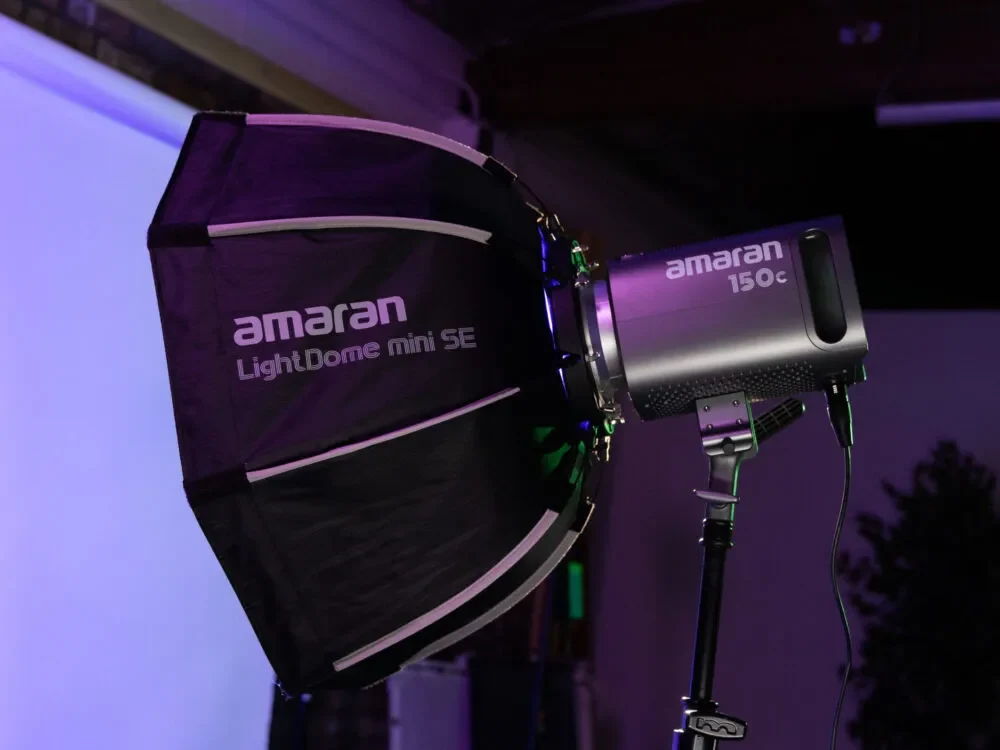
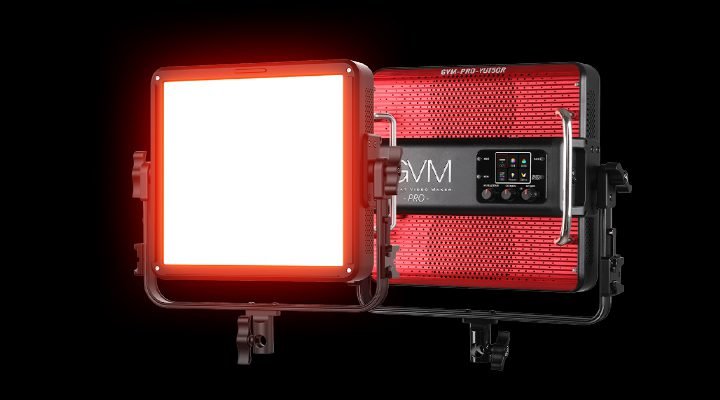
Continuous light remains the default for youtube lighting because what you see on the monitor is what you get in the frame — no flash sync, no guessing at exposure between takes. For talking-head videos, product reviews, and multi-camera setups, that real-time feedback matters more than raw peak output. Both the 150c and the YU150R lean into this with full-color, point-source designs built around a Bowens mount, which means either one slots straight into a modifier kit a creator may already own.
Color Range and Control: YU150R’s Wider CCT Advantage
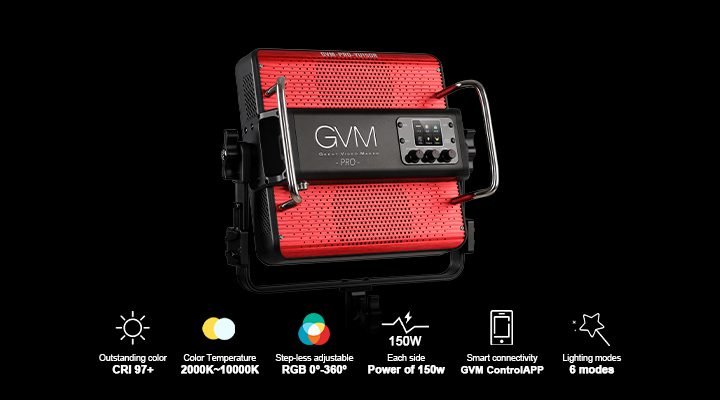
Color accuracy is where both lights market themselves hardest, and the numbers favor the YU150R here. The GVM YU150R covers CRI ≥97 across a 2000K–10,000K bi-color range, while the amaran 150c is rated CRI 95+ across a narrower 2,500K–7,500K span. For creators who shoot both warm interview setups and cool daylight-matched B-roll, that extra 2,000K of headroom on each end gives the YU150R more flexibility without swapping fixtures.
Control-wise, the YU150R also runs deeper: six lighting modes (CCT, HSI, RGB, GEL, Source Matching, and Scene Effects) versus the 150c’s CCT and HSI-focused interface with 9 built-in FX. The YU150R’s 12 cinematic Scene Effects — lightning, candlelight, welding, TV flicker among them — give creators more out-of-the-box looks without programming a custom sequence first.

Output and Build Compared
On raw output, the amaran 150c posts strong photometric numbers, reaching up to 16,510 lux at 1m with its Hyper Reflector and 11,196 lumens at 5,600K. It’s a capable, well-documented fixture with a metal Bowens mount and an EPP travel case. But GVM’s YU150R matches the same 150W power class while adding a feature the 150c doesn’t offer: sound-synchronized lighting, which shifts brightness, color, and strobe rhythm in response to audio — a genuine advantage for music streams, vlogs, and stage content where the 150c’s still, manual programming falls short.
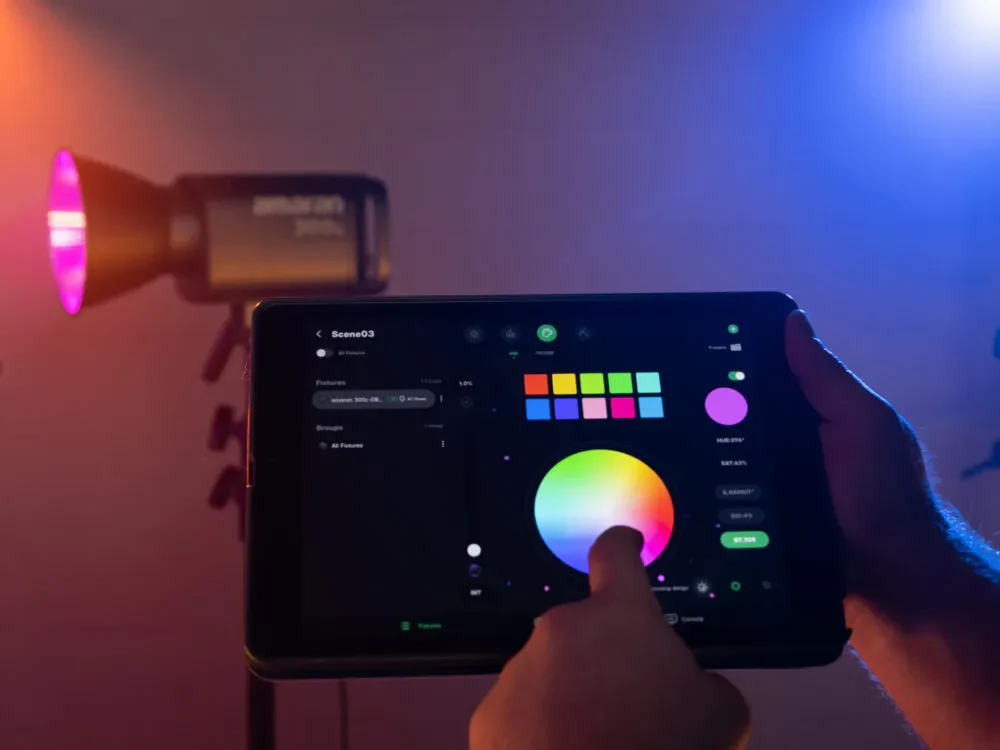
Both lights support app control, but the control ecosystems diverge. The 150c relies on Sidus Link over Bluetooth with a ≤100m range. The YU150R goes further with APP control, Bluetooth Mesh for fast multi-light pairing, and a standard DMX interface supporting both 8-bit and 16-bit modes — putting it on par with lighting consoles used on professional sets, a tier of control the 150c’s app-only approach doesn’t reach.
GVM YU150R: Full Specifications
| Feature | Specification / Benefit |
|---|---|
| Power Output | 150W, stable long-term performance with efficient heat dissipation |
| Color Rendering | CRI ≥97 for accurate, natural skin tones |
| Color Temperature | 2000K–10,000K bi-color range |
| Brightness Control | 0–100% stepless dimming |
| Lighting Modes | RGB, CCT, HSI, GEL, Source Matching, Scene Effects (6 modes) |
| Scene Effects | 12 cinematic effects incl. Lightning, Candlelight, Welding, TV Flicker |
| Sound Sync | Auto brightness/color/strobe response to external audio |
| Wireless Control | APP + Bluetooth Mesh multi-light group control |
| Wired Control | Standard DMX, 8-bit and 16-bit modes |
| Mount | Bowens mount, compatible with standard modifiers |
Real-World Use: Studio, Live Stream, and On-Location
For a solo creator shooting interviews or product reviews, the difference between these two lights shows up fastest in setup speed. The YU150R’s Bluetooth Mesh lets a two- or three-light setup pair and sync in seconds, with brightness and color temperature adjustable from a phone without walking back to each stand. Add the DMX interface, and the same fixture scales into a multi-camera studio or a film set running a full lighting console — a jump the 150c’s Sidus Link app alone doesn’t cover as cleanly.
Live streamers get an even more direct advantage. The YU150R’s sound-synchronized mode reacts to music or audio input in real time, shifting brightness, color, and strobe rhythm to match the beat — useful for music streams, DJ sets, or any vlog that wants the lighting to feel alive rather than static. Neither fixture requires flash sync or exposure guesswork, which is the whole appeal of continuous light for video work, but the YU150R’s Scene Effects and Source Matching modes give creators more ready-made looks to reach for mid-shoot without building a custom program from scratch.
Which One Should You Buy
If the deciding factor is ecosystem familiarity — an existing Aputure/amaran kit, Sidus Link workflow, and documented photometrics for every accessory combination — the 150c is a known quantity. But for creators building a youtube lighting setup from the ground up, the YU150R delivers a wider CCT range, higher rated CRI, more lighting modes, DMX support, and sound-reactive lighting the 150c simply doesn’t have — all in the same 150W continuous light class. For anyone weighing feature depth against price, the YU150R is the harder fixture to argue against.
Conclusion
Both the amaran 150c and the GVM YU150R are capable 150W RGB continuous lights built for the same job: giving creators full-color, point-source control on a Bowens mount. But once you compare the full feature set — CCT range, control modes, DMX, and sound sync — the YU150R comes out ahead on versatility without asking you to pay a premium for a name. If your next upgrade is a continuous light that can grow from solo YouTube setups into multi-fixture, console-driven productions, the GVM YU150R is worth putting at the top of the list.