A ring light with softbox kit promises the best of both worlds: the crisp, catchlight-friendly glow of a ring light paired with the gentle, shadow-softening spread of a softbox. On paper that sounds like the perfect all-in-one lighting solution for content creators, but does the combo actually deliver in practice? We ran a hands-on test covering three areas that matter most to photographers and video creators — brightness output, color temperature consistency, and diffusion quality — to see how this pairing performs in real shooting conditions.
Table of Contents
Why Test a Combo Kit in the First Place?
Most creators eventually outgrow a single light source. A ring light alone is fantastic for close-up beauty shots and vlogging, but it struggles with wider scenes and can throw unflattering reflections onto glasses or shiny surfaces. A softbox alone solves the shadow problem beautifully, but it’s slower to set up and less convenient for quick, on-the-go shoots. A combo kit is designed to bridge that gap, giving users the flexibility to switch between a punchy, direct light and a soft, wraparound glow depending on the shot.
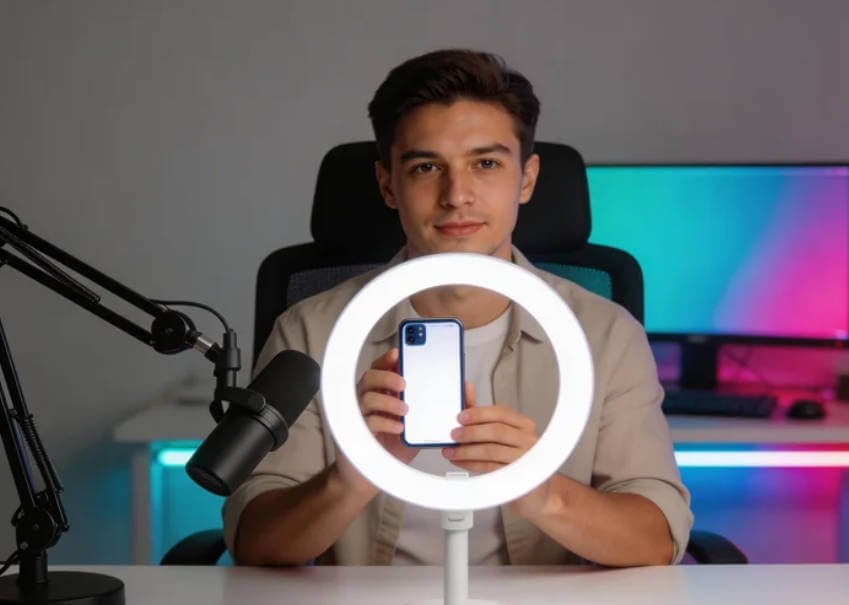
Brightness Test: How Much Light Do You Actually Get?
In our test, the ring light component consistently produced a strong, even wash of light across the subject’s face, with output that felt more than sufficient for indoor filming even in rooms with limited ambient light. Dimming the unit down from full brightness to roughly 25% still preserved a clean, flicker-free image, which matters a lot for video work where inconsistent output can be distracting.
The softbox attachment, by contrast, delivered a noticeably lower peak brightness for the same wattage, simply because the diffusion material absorbs some light in the process of softening it. This is expected and not a flaw — it’s the trade-off you accept in exchange for smoother, more flattering light. For subjects further from the camera, we found it necessary to move the softbox closer or increase output to compensate.
Takeaway: if raw brightness in a small space is your priority, the ring light mode wins. If you’re shooting a subject at a greater distance or need to fill a larger area, plan for the softbox to require a bit more power or proximity.
Color Temperature Test: Staying Consistent Across Settings
Color consistency is where a lot of budget lighting kits fall apart, so this was a key part of our evaluation. The kit we tested offered a variable color temperature range spanning roughly 3200K (warm, tungsten-like) to 5600K (cool, daylight-balanced), which covers the two most common lighting scenarios creators face — indoor ambient mixing and outdoor or daylight-matched shoots.
Switching between the ring light and softbox attachments, we didn’t notice any dramatic color shift, which is important; a kit that changes hue depending on which diffuser is attached would force constant white-balance adjustments in post. A reported color rendering index (CRI) around 97 also lined up with what we saw on camera — skin tones looked natural rather than washed out or overly warm, even at the extremes of the dimming range.
Takeaway: a high CRI rating (mid-90s or above) is a genuinely useful spec to check before buying, since it directly affects how true-to-life skin tones and colors appear without extra color correction.
Diffusion Effect Test: Shadow Control and Softness
This is the category where the two attachments show the clearest personality difference.
- Ring light mode: produced a bright, well-defined circular catchlight in the eyes and largely shadow-free lighting on the face, but subjects with glasses picked up a visible ring-shaped reflection, and the light felt slightly flatter and less three-dimensional overall.
- Softbox mode: spread the light out across a wider surface area, which softened shadows around the nose and jawline and gave the subject noticeably more depth and dimension. The trade-off was a longer setup process and a bulkier footprint on set.
For beauty tutorials, product close-ups, and quick social clips, the ring light diffusion held up well. For anything resembling a portrait session or an on-camera interview, the softbox attachment produced the more polished, professional-looking result.
Feature Comparison Table
| Feature | Ring Light Mode | Softbox Mode |
|---|---|---|
| Light Shape | Circular | Rectangular/diffused panel |
| Peak Brightness | Higher for the same wattage | Slightly reduced due to diffusion |
| Color Temperature Range | ~3200K–5600K | ~3200K–5600K |
| CRI (Color Accuracy) | ~97 | ~97 |
| Shadow Control | Good for close range | Excellent, more three-dimensional look |
| Setup Time | Fast | Moderate |
| Portability | Highly portable | Bulkier, needs more space |
| Best Use Case | Vlogging, beauty tutorials, product shots | Portraits, interviews, studio sessions |
Who Should Buy a Combo Kit?
If your content mix genuinely spans both categories — say, quick talking-head videos one day and more polished portrait or interview work the next — a combo kit is a practical way to avoid buying two separate lighting systems. Creators who exclusively shoot one style (only beauty close-ups, or only studio portraits) may still be better served by a dedicated single-purpose light, since a combo kit inevitably involves some compromise in each mode compared to a purpose-built unit.
Conclusion
Our test showed that a ring light with softbox kit genuinely delivers two distinct lighting characters from one system: bright, punchy, catchlight-rich output in ring mode, and soft, shadow-minimizing, dimensional light in softbox mode. Color temperature stayed consistent between the two, which is the detail that makes a combo kit actually usable rather than just a gimmick. For creators who need flexibility without carrying two full lighting rigs, this type of kit is a smart, space-saving investment — just be ready to trade a little peak brightness for the softer look when you switch modes.
Ready to upgrade your lighting setup? Compare the full specs and current pricing on a ring light and softbox combo kit to find the configuration that best matches your shooting style.